
By 2026, the average time to fill a senior engineering role is projected to exceed 50 days, with recruitment costs often reaching 40% of a new hire’s annual salary. You likely feel the pressure of these delays as your roadmap stalls and competitors ship features faster. Many leaders are now realizing that the benefits of hiring a dedicated team far outweigh the slow, expensive grind of local recruitment. It’s a common struggle to balance high overhead with the urgent need for specialized skills in areas like custom APIs or robust mobile architecture.
This guide shows you how to leverage an external squad to accelerate product cycles and reduce operational overhead while maintaining rock-solid code quality. We’ll explore how this model delivers seamless, enterprise-grade innovation and provides the scalable technical expertise your business needs to stay competitive. From predictable delivery schedules to accessing high-tier talent, here is why a dedicated team is the strategic choice for 2026.
Key Takeaways
- Understand why the shift from project-based gigs to strategic team extensions has become the 2026 standard for long-term product success.
- Maximize ROI by analyzing the benefits of hiring a dedicated team, including blazing-fast time-to-market and the elimination of traditional recruitment overhead.
- Compare the Total Cost of Ownership across in-house and freelance models to identify the most scalable and cost-efficient path for your enterprise.
- Learn to implement rock-solid integration protocols, from CI/CD pipelines to secure communication channels, ensuring your external team functions as a seamless unit.
- Discover how a dual-continent development cycle provides 24/7 engineering power to accelerate your innovation roadmap and maintain a competitive edge.
What is a Dedicated Development Team and Why is it the 2026 Standard?
A dedicated development team isn’t just a group of outsourced workers. It’s a long-term strategic partnership where resources are allocated exclusively to your business. By 2026, the tech industry has pivoted from short-term project "gigs" to robust "team extensions" that mirror your internal culture and technical standards. This model succeeds where traditional outsourcing often fails because it prioritizes deep alignment over simple task completion.
Modern software requires more than just code; it requires a cohesive Programming team that understands your specific business logic. A typical squad includes Project Managers, Developers, QA engineers, and DevOps specialists. This cross-functional approach ensures that every deployment is enterprise-grade and scalable. Understanding the benefits of hiring a dedicated team starts with recognizing that these experts work solely on your product, which eliminates the distractions and friction found in multi-client agencies.
To better understand this concept, watch this helpful video:
The Mechanics of Exclusivity
100% resource dedication is the engine of high-velocity development. When engineers don’t have to context switch between multiple clients, productivity increases by up to 40% based on recent 2025 industry benchmarks. Long-term knowledge retention prevents the "brain drain" that happens when contractors leave mid-project. This stability allows the team to build a rock-solid foundation for your architecture.
A Dedicated Resource is a full-time expert integrated into your workflow.
When to Move Beyond Freelancers
Freelancers work well for small fixes or isolated tasks. They struggle with complex mobile app builds, custom ERP migrations, or API-heavy projects that require blazing-fast performance. Relying on fragmented resources often leads to massive technical debt that costs 3x more to fix later.
By 2026, 65% of mid-sized enterprises have abandoned the "gig" model for core product development. If your project requires ongoing product evolution and seamless integration, the benefits of hiring a dedicated team
The Core Benefits of Hiring a Dedicated Team for Scalable Growth
Software development in 2026 moves at a pace that renders traditional recruitment cycles obsolete. One of the primary benefits of hiring a dedicated team is the immediate access to a ready-to-code infrastructure. You aren’t just adding headcount; you’re integrating a pre-calibrated engine designed for blazing-fast execution. This approach eliminates the friction of setting up local environments and internal protocols, allowing your project to hit the ground running with enterprise-grade standards from day one.
Accelerated Development Velocity
Traditional hiring for senior engineers currently averages a 120-day cycle. Dedicated teams bypass this lag entirely, providing instant access to vetted professionals. These teams arrive with established internal workflows that typically increase sprint completion rates by 25% within the first month of engagement. Dedicated teams reduce the onboarding tax for new features because they maintain a continuous knowledge base of your project’s specific architectural nuances. This collective intelligence ensures that adding a complex module doesn’t require a three-week ramp-up period for every developer involved.
Operational and Financial Flexibility
In-house teams carry heavy fixed costs that can drain a balance sheet. Between benefits, office overhead, and mandatory taxes, a full-time employee often costs 1.25 to 1.4 times their base salary. Dedicated resources shift these liabilities into variable costs that scale with your roadmap. You can ramp up capacity by 50% during a critical release phase or scale down once the product enters maintenance mode. This model often follows the principles of an Offshore Development Center, where the administrative and HR burdens remain the responsibility of the provider. It allows your leadership to focus on product strategy rather than payroll logistics.
Innovation thrives when your core team isn’t bogged down by basic maintenance. Accessing specialized talent through this model means you can deploy experts in Custom APIs, mobile-first architectures, or complex ecommerce engines without a long-term commitment. By integrating rock-solid QA and DevOps protocols directly into the workflow, the team ensures that every deployment meets rigorous performance benchmarks. If you want to maximize these efficiencies, you should automate your backend workflows using specialized tools that complement your external experts. This synergy between high-level talent and robust process is why the benefits of hiring a dedicated team continue to drive success for high-growth tech companies.
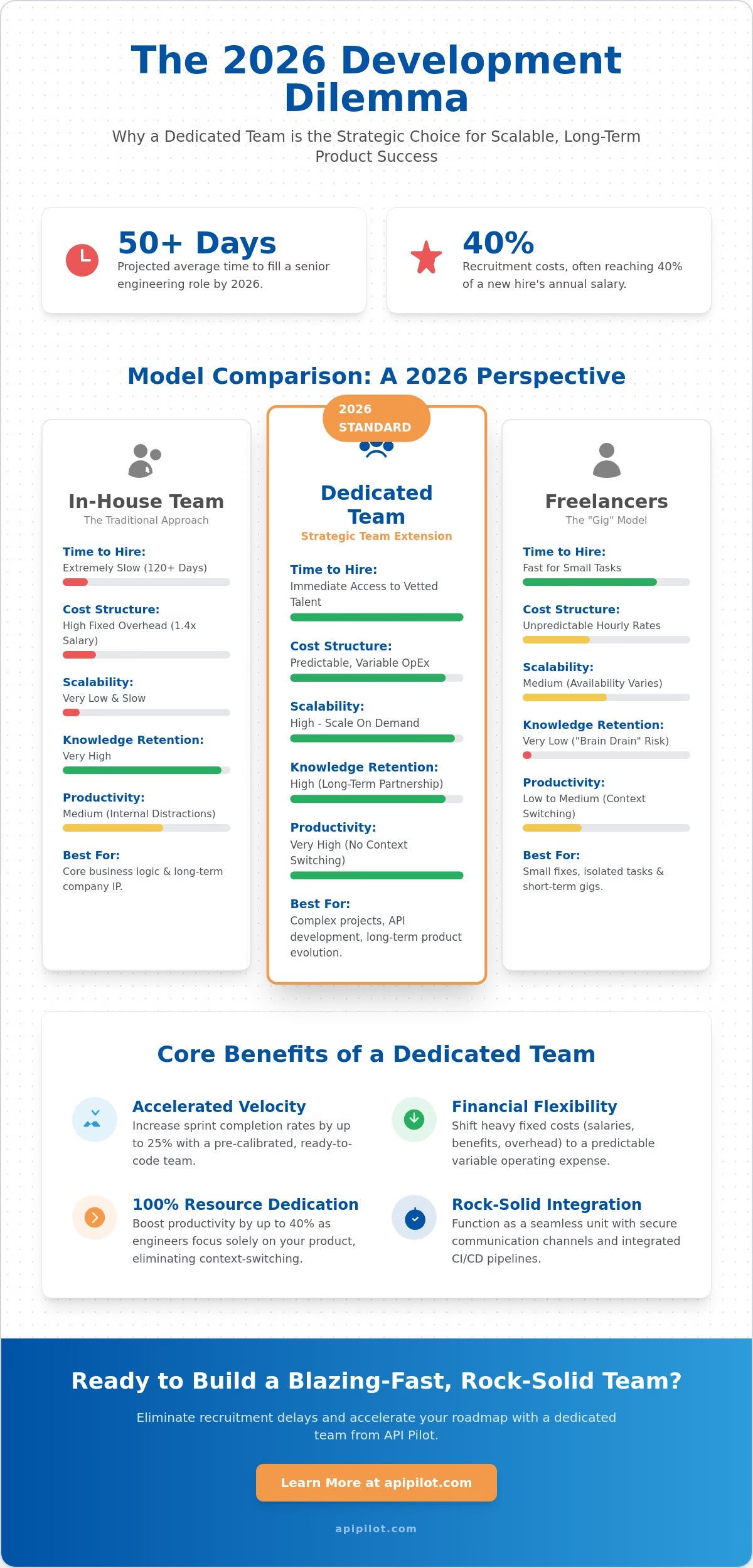
Dedicated Team vs. In-house vs. Freelancers: A 2026 Comparison
Selecting a development model in 2026 requires looking past the hourly rate to the Total Cost of Ownership (TCO). While an in-house team offers 100% control, the overhead is immense. Industry data shows that recruitment for a single senior engineer costs roughly $4,000 and takes an average of 42 days to finalize. When you add benefits, hardware, and office space, the TCO for in-house staff often exceeds the initial salary by 25%. Freelancers offer the lowest entry price, but they lack the institutional memory required for complex, long-term scaling. One of the primary benefits of hiring a dedicated team is the ability to bypass these hidden costs while maintaining high-speed output.
The trade-off between control and speed is where the dedicated model excels. Startups needing to hit a 90-day MVP milestone can’t wait for a six-month hiring cycle. Conversely, enterprises can’t risk the architectural debt that often comes with fragmented freelance work. A dedicated team provides a middle ground: you maintain product direction while the partner handles the operational burden of talent retention and technical management.
The Reliability Gap
Freelancers pose a significant risk for long-term maintenance. They often juggle multiple clients, which leads to inconsistent availability and fragmented documentation. If a freelancer leaves a project mid-build, the cost to onboard a replacement is 30% higher due to the lack of internal accountability structures. Dedicated teams eliminate this gap. They function as a managed unit with internal oversight, ensuring that architectural consistency remains intact even if individual members change. This model acts as a vital instrument for growth, mirroring your internal culture and standards without the geographic constraints of a local office.
Cost-Benefit Analysis for Enterprise Projects
For large-scale CRM or ERP builds, the ROI of a dedicated team is driven by specialized expertise. Niche technologies like custom API development and complex SDK integrations require developers who can hit the ground running. API Pilot specializes in these high-stakes, custom enterprise solutions, providing the rock-solid reliability that mission-critical systems demand. Instead of spending months training in-house staff on new JSON-based workflows, you get immediate access to a “ready-made” unit.
- In-house: High control, but high fixed costs and slow scaling.
- Freelancers: Fast start, but high risk of technical debt and zero accountability.
- Dedicated Team: Blazing-fast onboarding with enterprise-grade security and 100% project focus.
Ultimately, the benefits of hiring a dedicated team center on predictable performance. You aren’t just buying hours; you’re securing a scalable foundation that adapts to your roadmap. This allows your internal leadership to focus on strategy while the dedicated unit handles the heavy lifting of building robust, production-ready code.
How to Seamlessly Integrate a Dedicated Team into Your Workflow
One of the core benefits of hiring a dedicated team is the ability to bypass the 42-day average hiring cycle seen in internal HR departments. However, speed only translates to value if the integration is seamless. You must establish rock-solid communication protocols from the first hour. Use Slack for real-time collaboration, Jira for task transparency, and Zoom for high-bandwidth alignment meetings. According to a 2023 Buffer report, 71% of remote workers cite clear communication as the most critical factor for project success. Don’t leave this to chance; set a recurring cadence for weekly retrospectives and monthly roadmap reviews.
Technical integration requires more than just giving away passwords. To maximize the benefits of hiring a dedicated team, your technical stack must be ready for immediate contribution. This involves:
- Automated CI/CD Pipelines: Ensure the team can push code to staging environments without manual intervention.
- Git Access Management: Use granular permissions to maintain security while allowing the team to branch and merge effectively.
- Measurable KPIs: Track velocity, lead time for changes, and mean time to recovery (MTTR) to ensure delivery remains high-speed.
Fostering a “One-Team” culture is the final step. Remote developers shouldn’t feel like external vendors. Include them in company town halls and project Slack channels. When the team feels like a core part of your business, they stop just writing code and start solving business problems.
Technical Onboarding Best Practices
Start by creating a “Source of Truth” using robust documentation and clear API specifications. This prevents the “knowledge silo” effect where only your in-house team understands the legacy code. The Project Manager serves as the vital bridge, translating your high-level vision into executable technical requirements. Daily stand-ups are essential for maintaining blazing-fast momentum and catching technical debt before it compounds into a sprint-ending blocker.
Managing Remote Security and Compliance
Security is a non-negotiable requirement in 2026. Ensure your partner follows enterprise-grade standards like ISO 27001 or SOC2. IBM’s 2024 Cost of a Data Breach Report found the average breach cost rose to $4.88 million, making security protocols your highest ROI investment. Protect your intellectual property by integrating remote squads into your existing VPN and zero-trust architectures. This ensures every endpoint is verified and data privacy is maintained across borders without sacrificing developer productivity.
API Pilot: Delivering Blazing-Fast, Rock-Solid Dedicated Teams
API Pilot provides more than just extra hands; we deliver high-performance engineering engines tailored for your specific business goals. By leveraging the benefits of hiring a dedicated team, you bypass the traditional recruitment lag and gain immediate access to a “Developer-First” culture. We focus on performance and scalability, ensuring that every project we touch is built to handle enterprise-level loads from the start. We don’t believe in “good enough” code; we believe in rock-solid architecture that scales with your user base.
Our dual-continent advantage provides a strategic edge that most local firms cannot match. With offices in Las Vegas and Karachi, we utilize a 12-hour time difference to maintain a continuous 24/7 development cycle. This model allows for “follow-the-sun” productivity. Your project never stops moving. In 2024, our clients reported an average 35% increase in sprint velocity by utilizing this round-the-clock approach. This isn’t just about speed; it’s about maintaining a consistent pace that keeps you ahead of competitors without burning out your local staff.
Quality is non-negotiable at API Pilot. We specialize in enterprise-grade software and seamless API integration. Our vetting process is one of the most rigorous in the industry. We accept fewer than 3% of applicants, subjecting every engineer to multi-stage technical evaluations and real-world coding challenges. This ensures your dedicated team consists only of top-tier talent capable of writing clean, maintainable code that integrates perfectly with your existing tech stack.
Custom Solutions for Global Brands
We build everything from high-performance mobile apps to complex, multi-tenant ecommerce platforms. Our team approaches every project with a “Developer-First” mindset, ensuring that the underlying architecture is as robust as the user interface. We prioritize clean code and comprehensive documentation to make future scaling simple. If you’re ready to build a product that stands the test of time, you can explore our Custom Software Development options today to see how we handle complex requirements.
Start Your Scaling Journey Today
The transition from “hiring pain” to “development power” is faster than you think. One of the greatest benefits of hiring a dedicated team is the flexibility to scale without the long-term risk of local employment liabilities. We can have your team fully operational in under 15 days, removing the overhead of traditional HR, benefits, and infrastructure management. We handle the logistics while you retain full control over the product vision and roadmap. Contact API Pilot to build your dedicated team today.
Future-Proof Your Engineering Strategy for 2026
The software landscape in 2026 demands more than just code; it requires architectural resilience and rapid deployment. Shifting from fragmented freelance models to a unified approach secures 100% focus on your product roadmap. One of the primary benefits of hiring a dedicated team is the total elimination of recruitment bottlenecks. This allows you to scale your workforce in under 14 days rather than the industry average of 4 months. API Pilot provides this agility through our dual-hub operations in Las Vegas and Karachi, ensuring 24/7 global coverage for your mission-critical projects.
Whether you’re building custom CRMs, enterprise-grade ERPs, or high-performance mobile apps, our specialists deliver the technical depth needed for 99.9% uptime. We focus on providing blazing-fast, rock-solid infrastructure that handles enterprise-level traffic without friction. Our teams integrate into your workflow in less than 72 hours, bringing specialized expertise that would take years to recruit locally. Don’t let talent shortages stall your 2026 growth targets. Scale your engineering capacity with an API Pilot dedicated team and build the future today.
Frequently Asked Questions
What is the main difference between a dedicated team and staff augmentation?
A dedicated team provides a full, self-managed squad that focuses exclusively on your long-term product goals. Staff augmentation adds individual developers to your existing internal team to fill 20% or 30% skill gaps. One of the core benefits of hiring a dedicated team is the reduction in management overhead, as the provider handles all HR, infrastructure, and administrative tasks. This model allows your internal leaders to focus on high-level strategy while we deliver enterprise-grade code.
How much does it cost to hire a dedicated development team in 2026?
Costs depend on the region and the seniority of the engineers involved. According to 2024 industry data from Accelerance, offshore rates for senior developers average $45 to $75 per hour, and these figures are projected to adjust by 3% to 5% annually through 2026. You’ll typically pay a predictable monthly flat fee per developer. This fee covers their salary, workstation, and management costs, making it easier to manage your 12-month or 24-month budget.
How do I ensure the quality of work from a remote dedicated team?
You ensure quality by implementing automated CI/CD pipelines and requiring 80% unit test coverage on all new code. API Pilot uses rock-solid performance monitoring tools and conducts weekly sprint reviews to demonstrate functional increments. We use peer code reviews and adhere to ISO 27001 security standards to maintain elite output quality. This direct oversight keeps the project on track and maintains blazing-fast execution speeds throughout the development lifecycle.
Can I choose the specific developers who will work on my project?
Yes, you have the final word on every team member through a rigorous technical interview process. You’ll review CVs and conduct 45-minute live coding sessions to verify that each developer meets your specific requirements. This ensures the team integrates seamlessly with your company culture and possesses the exact stack expertise needed. You aren’t just getting a resource; you’re selecting a partner for your 2026 innovation goals.
What happens if I need to scale the team size up or down quickly?
Scaling typically requires a 30-day notice period to add or remove developers from your squad. This flexibility allows you to expand your team by 50% during heavy development phases or reduce it once the product enters a maintenance cycle. We manage the transition to ensure knowledge stays within the team. It’s a robust way to control burn rates while maintaining the momentum of your software project.
How does API Pilot handle intellectual property and code ownership?
API Pilot transfers 100% of intellectual property rights and code ownership to you upon payment. All contracts include strict non-disclosure agreements and IP transfer clauses that take effect from the first line of code written. You retain full control over the GitHub repositories and all deployment environments. This setup ensures your proprietary algorithms and data structures remain your exclusive business assets without any legal ambiguity.
Is a dedicated team suitable for short-term projects under three months?
Dedicated teams are generally not recommended for projects shorter than 90 days. The onboarding and integration phase usually takes 2 to 4 weeks, which consumes a large portion of a short-term timeline. For projects lasting less than 3 months, a project-based model or staff augmentation is more efficient. The benefits of hiring a dedicated team are most visible in long-term engagements where deep product knowledge is required.
What technical stacks does API Pilot specialize in for dedicated teams?
API Pilot specializes in high-performance stacks including Node.js, Python, and Go for backend services. We build robust frontends using React and Vue.js, and manage cloud infrastructure on AWS and Azure. Our teams are experts in building REST and GraphQL APIs that handle 10,000+ concurrent requests with rock-solid uptime. We focus on modern, scalable technologies that power enterprise-grade applications and ensure seamless integration with your existing systems.