
Launching a mobile application is a monumental achievement, but the work doesn’t stop once it hits the app stores. To protect your investment and ensure long-term success, you need a robust post-launch strategy. This guide will teach you how to implement a rock-solid mobile app maintenance plan to keep your application fast, secure, and competitive in a crowded market.
What Is Mobile App Maintenance (And Why It’s Non-Negotiable)
Mobile app maintenance is the continuous, ongoing process of monitoring, updating, and improving an application after its initial release. It’s far more than just fixing the occasional bug; it’s a strategic commitment to ensuring the long-term value and performance of your digital product. Neglecting maintenance is one of the fastest ways to see your investment diminish. The high cost of this neglect manifests as poor app store reviews, frustrating user churn, critical security vulnerabilities, and an app that quickly becomes obsolete.
A helpful analogy is car maintenance. Just as a vehicle requires regular check-ups and repairs to stay reliable on the road—a service expertly handled by mobile mechanics like those at bromechanic.com—a mobile app requires ongoing technical care to perform well for its users. Without it, both will eventually break down.
Conversely, a consistent maintenance plan delivers significant benefits, including an enhanced user experience (UX), a higher return on your development investment, and a stronger, more resilient security posture. It’s the engine that drives sustained growth and user satisfaction throughout the Software Development Life Cycle (SDLC).
The 4 Core Types of Mobile App Maintenance
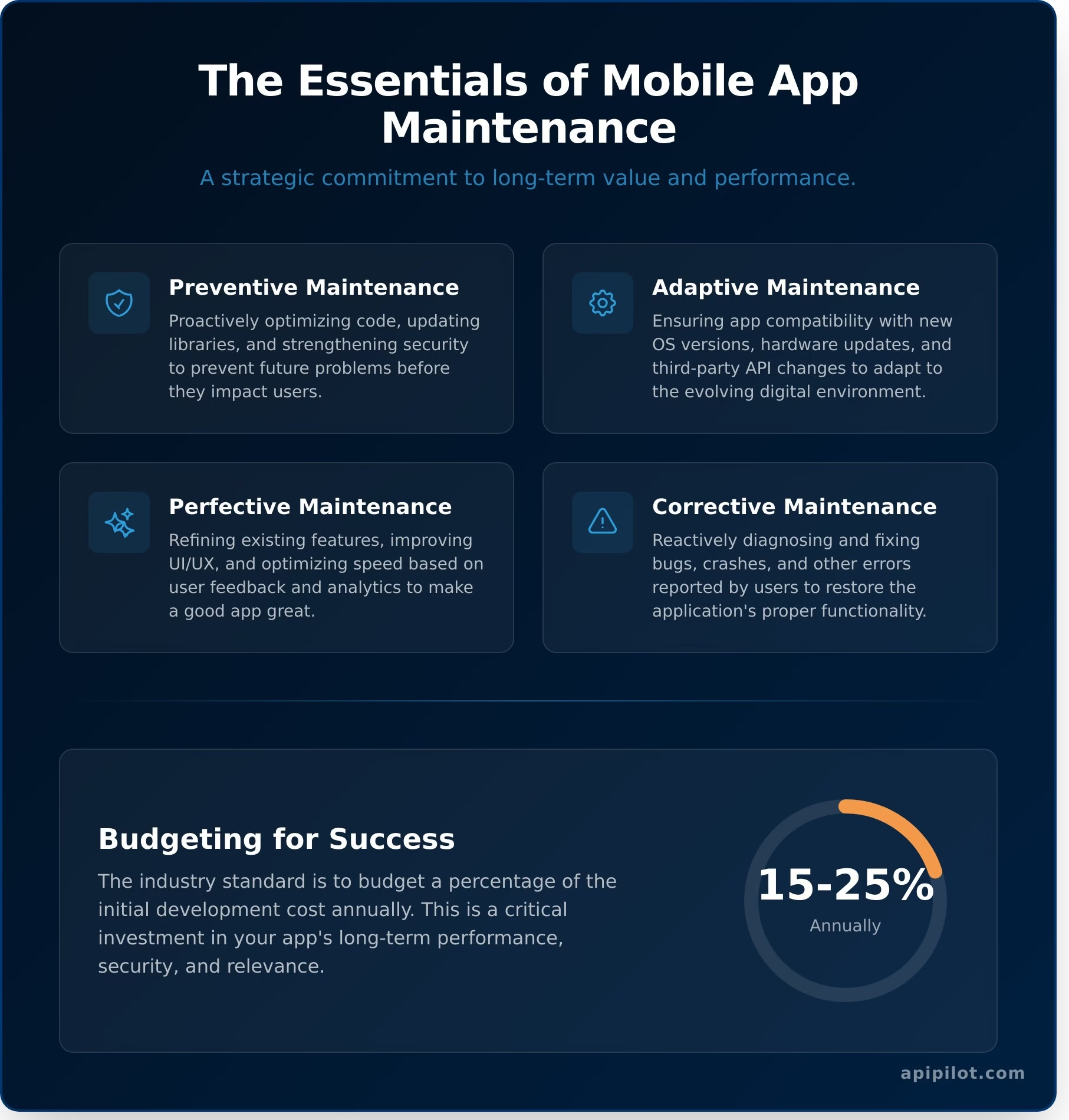
App maintenance can be broken down into four distinct categories, each addressing a different aspect of your application’s health and evolution. Understanding these types helps you build a comprehensive and balanced strategy.
- Preventive Maintenance: This is about being proactive. It involves optimizing code, updating libraries, and strengthening security measures to prevent future problems from arising. The goal is to identify and fix potential issues before they can impact your users.
- Adaptive Maintenance: The digital landscape is always changing. Adaptive maintenance ensures your app remains compatible with new operating system versions (like iOS and Android updates), hardware, and third-party API changes. It adapts your app to its evolving environment.
- Perfective Maintenance: This type focuses on refinement. Based on user feedback and performance analytics, perfective maintenance involves improving existing features, enhancing the UI/UX, and optimizing the app’s speed and efficiency. It’s about making a good app great.
- Corrective Maintenance: This is the reactive side of maintenance. When users report bugs, crashes, or other errors, corrective maintenance is the process of diagnosing and fixing those specific issues to restore proper functionality.
The Ultimate App Maintenance Checklist: 10 Best Practices
To build a robust and reliable application, follow this essential checklist. We’ve grouped these best practices into key areas to help you create a structured and effective maintenance plan that covers performance, security, and the overall user experience.
Performance & Monitoring
- Implement Robust Performance Monitoring: Use Application Performance Monitoring (APM) tools to get real-time insights into your app’s speed, server response times, and resource consumption. This allows you to spot and address performance bottlenecks before they affect a large number of users.
- Regularly Monitor App Analytics and Crash Reports: Keep a close eye on user behavior analytics and automated crash reports. These tools are invaluable for understanding how users interact with your app and for quickly identifying the root cause of crashes or freezes.
- Optimize Code and Database Queries for Speed: A clean, efficient codebase is the foundation of a high-performing app. Regularly refactor code, optimize database queries, and compress images and other assets to ensure your application remains fast and responsive.
Security & Compliance
- Conduct Regular Security Audits: Proactively identify and patch vulnerabilities by performing regular security audits and penetration testing. A single security breach can destroy user trust, making a consistent security patch schedule essential.
- Keep Third-Party Libraries and APIs Updated: Your app is only as secure as its weakest link. Outdated third-party libraries and SDKs are a common source of security flaws. Maintain a schedule for checking and updating all external dependencies.
- Ensure Compliance with Data Privacy Laws: Regulations like GDPR and CCPA are constantly evolving. Regularly review your app’s data handling practices to ensure you remain compliant and protect your users’ privacy.
Updates & User Experience
- Plan for Regular OS Compatibility Updates: Apple and Google release major OS updates annually. Your maintenance plan must include time and resources to test and update your app to ensure seamless compatibility with the latest versions of iOS and Android.
- Gather and Analyze User Feedback for Improvements: Your users are your best source of ideas for improvement. Actively monitor app store reviews, conduct surveys, and analyze support tickets to guide your perfective maintenance efforts.
- Maintain a Consistent UI/UX Across New Devices: As new phones and tablets with different screen sizes and resolutions are released, it’s crucial to ensure your app’s interface remains intuitive and visually appealing on all devices.
- Schedule and Communicate Updates to Your Users: Keep your users informed about upcoming changes, new features, and bug fixes. Clear communication through release notes and in-app messages builds trust and manages expectations.
Partnering for Success
A comprehensive maintenance plan requires expertise and consistent effort. An expert development partner ensures no best practice is overlooked and that your app is managed by a team dedicated to its long-term success. At API Pilot, we offer comprehensive maintenance plans designed to protect your investment and keep your application performing at its peak. Build a rock-solid app with our experts.
Budgeting for App Maintenance: How to Calculate the Cost
A common mistake is viewing maintenance as an unforeseen expense rather than a planned operational cost. The widely accepted industry standard is to budget between 15-25% of the initial development cost annually for ongoing maintenance. For example, if your app cost $100,000 to build, you should plan to invest $15,000 to $25,000 per year to keep it secure, updated, and optimized. This isn’t just a cost; it’s a critical investment in your app’s future performance and relevance.
Key Factors That Influence Maintenance Costs
- App Complexity: An app with numerous features, complex logic, and multiple screens will naturally require more maintenance than a simple utility app.
- Technology Stack: The cost can vary depending on whether the app is native (iOS/Android) or cross-platform, as each has its own update requirements.
- Third-Party Integrations: Apps that rely on many third-party APIs (for payments, maps, analytics, etc.) require more effort to maintain, as each integration must be kept up-to-date.
- Support Level: The required level of support, from basic bug fixing to 24/7 emergency support, will directly impact the final cost.
Building Your Long-Term App Maintenance Strategy
An effective maintenance plan is more than a to-do list; it’s a long-term strategy that moves your team from a reactive, fire-fighting mode to a proactive state of continuous improvement. This requires defining clear goals, assigning roles, and establishing efficient processes for managing your app post-launch.
Choosing the Right Tools and Team
The right tools are essential for an efficient maintenance workflow. Your toolkit should include platforms for crash reporting (like Firebase Crashlytics), analytics (Google Analytics), and project management (Jira or Trello). You must also decide between an in-house team or an outsourced partner. While an in-house team offers direct control, an expert agency like API Pilot provides specialized knowledge, scalability, and cost-efficiency, making it an ideal choice for many businesses.
Creating a Maintenance Roadmap
A roadmap provides structure and predictability. Schedule regular update cycles, such as quarterly or bi-annually, to bundle bug fixes and minor improvements. Use a system to prioritize tasks based on their impact on users and the effort required to implement them. Most importantly, ensure your maintenance roadmap is aligned with your broader business goals, so that your technical efforts directly support your company’s growth.
Frequently Asked Questions (FAQs)
How often should a mobile app be updated?
At a minimum, apps should be updated to support new OS versions annually. However, for bug fixes, security patches, and feature improvements, a more frequent cycle of every 1-2 months is a good practice to keep users engaged and the app stable.
What is the difference between app maintenance and app support?
App maintenance is the proactive technical work of updating code, fixing bugs, and improving performance. App support is the user-facing service of answering questions, troubleshooting user issues, and providing guidance.
Can I perform mobile app maintenance myself?
While minor updates may be possible for those with technical skills, professional app maintenance requires deep expertise in coding, security, and platform guidelines. For business-critical applications, relying on a professional development team is strongly recommended.
What happens if I don’t maintain my app?
An unmaintained app will gradually degrade. It will experience more crashes, become vulnerable to security threats, stop working on new operating systems, and ultimately be removed from the app stores for non-compliance. This leads to lost users, revenue, and brand reputation.
How much does mobile app maintenance cost per month?
Using the 15-25% annual rule, you can calculate a monthly estimate. For an app that cost $100,000 to build, the annual maintenance budget would be $15,000-$25,000, which translates to approximately $1,250-$2,100 per month.
A well-executed maintenance strategy is the key to maximizing the value of your mobile application. By treating it as an essential, ongoing investment, you ensure your app remains a powerful asset that delights users and drives business growth for years to come. As experts in building and maintaining high-performance native and cross-platform apps, API Pilot has a proven track record of ensuring long-term app success for our global clients. Secure your app’s performance. Discuss your project with API Pilot.


