
Off-the-shelf software forces your unique workflows into a generic box. Disconnected systems create data silos and operational friction, while security vulnerabilities in legacy applications pose a constant threat. When this inefficiency becomes an inhibitor to growth, robust enterprise web application development transitions from a technical project to a core business strategy. The goal is to build more than just an application; it’s to engineer an enterprise-grade, scalable platform that serves as a single source of truth for your data.
Planning a project like this? See how our web development services work, from a free scope to a fixed quote in 48 hours.
Navigating this process, however, can feel daunting, with valid fears of complex builds and runaway budgets. This definitive guide eliminates that uncertainty. We provide a clear, no-nonsense roadmap through the entire development lifecycle-from initial strategic planning and rock-solid architecture to transparent budgeting and choosing the right technology partner. Get ready to build the secure, custom solution your business demands and unlock a clear return on your investment.
What is an Enterprise Web Application (and Why It’s Not Just a Big Website)
An enterprise web application is not just a large-scale website; it’s a mission-critical tool engineered to solve complex, organization-wide challenges. While a public website delivers content to a broad audience, an enterprise app serves specific internal user groups-like employees, managers, or partners-by automating and optimizing core business processes. These robust platforms are a form of Enterprise software, built to handle specific operational needs rather than general marketing or information dissemination.
To see how these concepts come together in practice, the video below offers a clear overview of the development landscape:
Core Characteristics: Scalability, Security, and Integration
Enterprise-grade applications are defined by their ability to perform under extreme pressure. They are built with three non-negotiable pillars in mind:
- Scalability: Engineered to handle massive data volumes and support thousands of concurrent users without performance degradation.
- Security: Implements advanced, multi-layered security protocols to protect sensitive corporate data, intellectual property, and customer information.
- Integration: Designed for seamless connectivity with other business-critical systems like ERPs, CRMs, and APIs to create a unified operational ecosystem.
Key Examples in Action
These applications are the engines that power modern business operations. Common examples include:
- Custom Customer Relationship Management (CRM) systems tailored to unique sales funnels and customer service workflows.
- Enterprise Resource Planning (ERP) software that centralizes finance, HR, and manufacturing data.
- Supply Chain Management (SCM) platforms for optimizing logistics from procurement to delivery.
- Business Intelligence (BI) dashboards that aggregate and visualize data for strategic decision-making.
Signs Your Business Has Outgrown Off-the-Shelf Tools
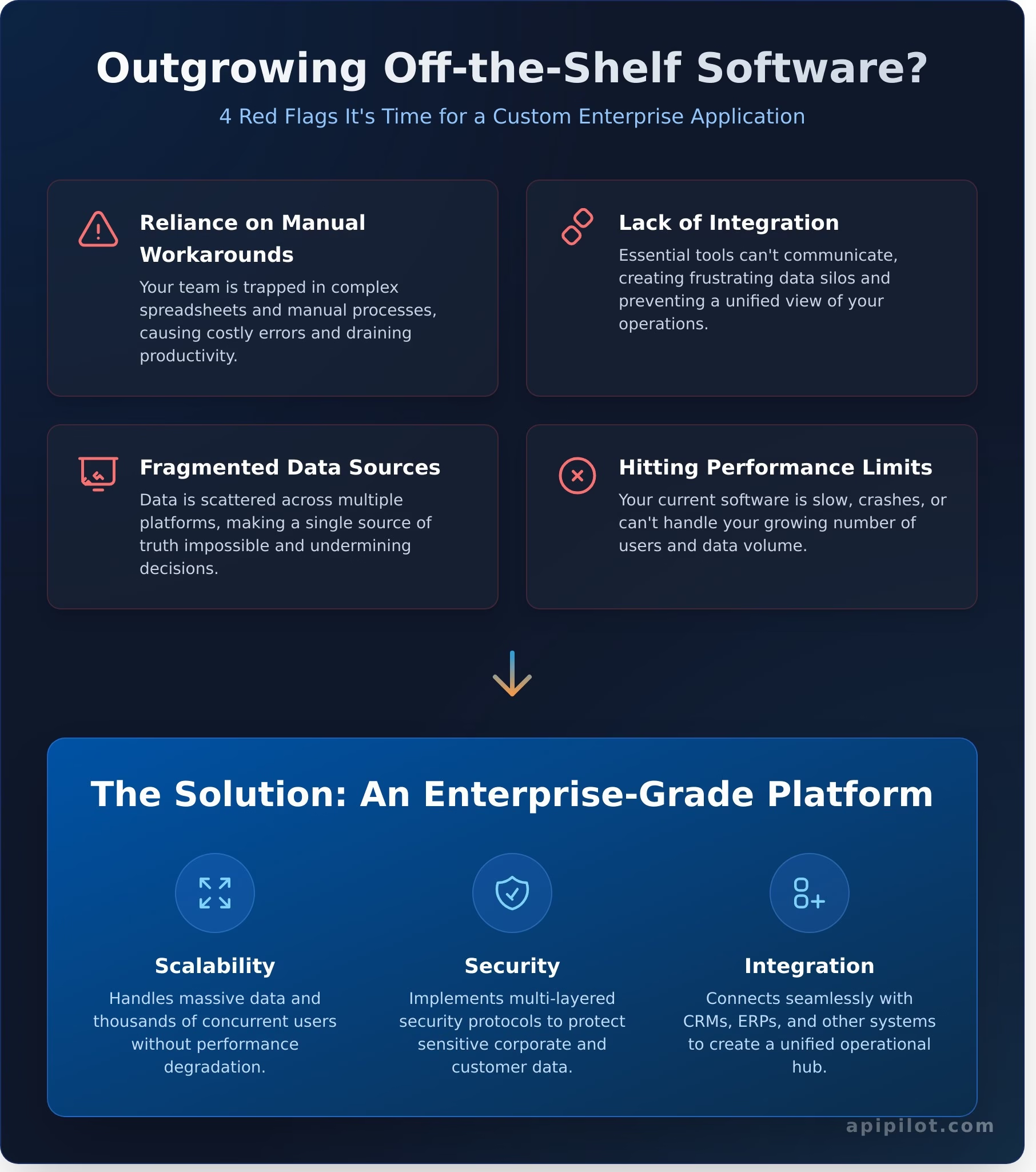
When generic software creates more problems than it solves, it’s a clear signal to consider custom enterprise web application development. Watch for these red flags:
- Your team relies on complex spreadsheets and manual workarounds to bridge functionality gaps.
- Your current software cannot integrate with other essential tools, creating frustrating data silos.
- Data is fragmented across multiple, disconnected platforms, making a single source of truth impossible.
- You are consistently hitting performance bottlenecks or user limits on your current subscriptions.
The Strategic Benefits: Driving ROI Beyond Simple Automation
Viewing enterprise web application development purely as an IT expense is a critical mistake. A well-architected custom application is a strategic asset designed to drive measurable ROI and create a significant competitive advantage. It moves beyond simple task automation to fundamentally reshape core business processes, unlock new revenue streams, and build a scalable foundation for future growth. The real value lies in creating a powerful, centralized tool that is perfectly aligned with your unique operational needs and strategic goals.
Streamlining Complex Workflows for Peak Efficiency
Off-the-shelf software often forces you to adapt your processes to its limitations. A custom enterprise web app does the opposite, molding technology to your ideal workflow. This optimization delivers powerful efficiency gains by:
- Automating high-volume, repetitive tasks like data entry and report generation, freeing up your team to focus on strategic, high-value work.
- Reducing costly human error in critical processes such as inventory management, order fulfillment, and financial reconciliation.
- Creating a single, unified interface that consolidates tools and data from multiple systems (ERP, CRM, etc.), eliminating friction and boosting productivity.
Centralizing Data for Smarter Business Intelligence
Data silos are a barrier to growth. A custom application can act as your organization’s central nervous system, creating a single source of truth that powers intelligent decision-making. This centralized data hub enables you to:
- Establish a single source of truth for all business data, ensuring consistency and eliminating conflicting reports from disparate systems.
- Enable real-time reporting and interactive dashboards, giving leadership an accurate, up-to-the-minute view of business performance.
- Improve forecasting accuracy by leveraging clean, structured, and centralized data for more reliable predictive analytics.
Enhancing Security and Ensuring Regulatory Compliance
In today’s regulatory landscape, a one-size-fits-all security model is a significant risk. A key benefit of custom enterprise web application development is the ability to build a robust, tailored security framework from the ground up. This allows you to control your data environment with precision by:
- Implementing custom security controls and encryption protocols that directly address your specific business risks and data sensitivity levels.
- Simplifying audits and compliance with regulations like GDPR, HIPAA, or CCPA by centralizing data management and access logs.
- Controlling data access with granular, role-based permissions, ensuring employees can only view and interact with the information essential to their roles.
The Enterprise Development Lifecycle: A Phased Approach to Success
A successful enterprise web application development project is not a leap of faith; it’s a disciplined, transparent process. We demystify development by breaking it into a structured lifecycle built on agile principles. This collaborative journey between your team and ours minimizes risk, ensures constant alignment with business goals, and transforms a complex vision into a high-performance application that delivers tangible value faster.
Phase 1: Discovery, Strategy, and Technical Scoping
This foundational phase is about deep collaboration to define precisely what we are building and why. Through intensive stakeholder interviews, we align on core business objectives and map existing workflows to identify critical pain points and opportunities for automation. This informs the Minimum Viable Product (MVP) scope, ensuring the first release delivers maximum impact. The result is a detailed project roadmap and technical specification that serves as the blueprint for success.
Phase 2: Architecture and UX/UI Design
With a clear strategy, we design the application’s core structure. Our architects engineer a scalable, secure, and resilient system architecture built for enterprise-grade demands. In parallel, our UX/UI design team builds wireframes and interactive prototypes. This iterative design process allows for crucial user feedback early on, guaranteeing the final interface is intuitive, efficient, and engineered for high user adoption from day one.
Phase 3: Agile Development and API Integration
Here, the blueprint becomes a functional application. Using an agile methodology, we build the software in iterative sprints, allowing for continuous feedback, testing, and adaptation. Connectivity is critical. We prioritize a robust, API-first approach, building custom APIs for seamless integration with your existing third-party systems and future-proofing the platform for expansion. See how we build robust, API-driven enterprise solutions.
Phase 4: Rigorous Testing, Deployment, and Support
Before going live, the application undergoes comprehensive Quality Assurance (QA) testing. Our process includes functional, performance, load, and security testing to ensure a rock-solid, reliable product. We manage the entire deployment process for a smooth, zero-downtime transition. Our partnership extends beyond launch, with ongoing maintenance, dedicated support, and strategic feature updates to ensure your application continues to evolve and deliver maximum business value.
Architecting for the Future: Key Technologies and Modern Trends
The architecture you choose is the single most critical decision in modern enterprise web application development. It’s the blueprint that determines your application’s scalability, resilience, and long-term ROI. A forward-thinking approach isn’t about chasing trends; it’s about building a robust, flexible foundation that can adapt to market demands for years to come. A strategic technology partner helps you navigate these choices to ensure your investment is future-proof.
Choosing the Right Tech Stack
Your technology stack directly impacts performance and developer efficiency. The goal is to select proven, enterprise-grade tools that align with your business objectives.
- Frontend Frameworks: Libraries like React offer blazing-fast, dynamic user interfaces, while comprehensive frameworks like Angular provide a structured environment ideal for complex, large-scale applications.
- Backend Technologies: Node.js excels in building high-performance, real-time applications. For data-intensive tasks and AI integration, languages like Python with frameworks such as Django offer a powerful and robust solution.
- Databases: SQL databases (e.g., PostgreSQL) are the rock-solid choice for structured, transactional data. NoSQL databases (e.g., MongoDB) provide the flexibility needed for unstructured data and massive scale.
The Power of Microservices and Headless Architecture
Monolithic systems, where everything is a single, tightly-coupled unit, are brittle and slow to update. Modern enterprise web application development favors decoupled architectures for superior agility. Microservices break down a large application into smaller, independent services that are easier to develop, deploy, and scale. A headless, or API-first, architecture separates the backend content management (the “head”) from the frontend presentation layer, allowing you to deliver content seamlessly to any channel-web, mobile, IoT, and beyond. This approach is fundamental to creating a truly omnichannel experience.
Integrating AI and Machine Learning
Integrating artificial intelligence is no longer a luxury; it’s a competitive necessity. By building AI and ML capabilities into your application’s core, you unlock powerful new efficiencies and user experiences. Use AI to power predictive analytics for sales forecasting, automate complex operational decisions, and deliver hyper-personalized content that drives user engagement and conversion. This transforms your application from a simple tool into an intelligent business asset.
How to Choose the Right Enterprise Development Partner
Selecting a vendor for your enterprise web application is more than a transaction; it’s the start of a long-term strategic partnership. The right partner will not only deliver robust, scalable code but will also act as a technical advisor, driving business value and ensuring your application evolves with your success. To make an informed choice, focus your evaluation on three core areas: technical prowess, process transparency, and strategic alignment.
Evaluating Technical Expertise and Portfolio
A proven track record is non-negotiable. Look beyond marketing claims and scrutinize their portfolio for direct experience with complex, large-scale projects similar to yours. Do their case studies demonstrate quantifiable results and a deep understanding of enterprise-level challenges like security, performance, and third-party integrations? Key questions to ask include:
- Can you demonstrate expertise in our required technology stack (e.g., specific cloud platforms, microservices architecture, API gateways)?
- What was the most complex integration you’ve managed for a past client?
- How do you ensure code quality and maintainability for long-term projects?
Assessing Communication and Project Management
Flawless execution depends on a transparent and efficient process. A competent partner will utilize an agile methodology, providing regular updates and clear visibility into project progress. Insist on a dedicated project manager who will serve as your single point of contact. During the sales process, clarify their communication protocols: What tools (like Jira or Slack) do they use? What is the standard meeting and reporting cadence? Clear, consistent communication prevents costly misunderstandings and keeps the project on track and on budget.
Beyond Code: Finding a True Strategic Partner
The most valuable partners contribute more than just code-they provide strategic insight. They should challenge your assumptions and recommend better solutions based on their technical expertise and understanding of your business objectives. A true partner understands that successful enterprise web application development is an ongoing journey, not a one-off delivery. They will discuss post-launch support, maintenance, and a roadmap for future enhancements from the very beginning. They invest in your success because it reflects on their own.
If you’re looking for a team that combines enterprise-grade technical skill with a commitment to your long-term business goals, we should talk.
Let’s discuss how we can become your strategic development partner.
From Blueprint to Launch: Your Partner in Enterprise Development
Ultimately, a successful enterprise application is far more than a complex website-it’s a strategic digital asset engineered for performance, security, and measurable ROI. Achieving this requires a disciplined development lifecycle, a forward-thinking architecture, and the right technology stack. The journey of enterprise web application development is a significant undertaking, and choosing the right partner is the most critical decision you’ll make to ensure a successful outcome.
Our global team has a proven track record of success, with extensive experience building enterprise-grade CRMs, ERPs, and other mission-critical systems from the ground up. With deep expertise in secure, scalable API development, we build robust solutions that not only meet your current needs but are also engineered to grow with your business for years to come.
Ready to build a powerful enterprise application? Let’s talk.
Your vision for a transformative digital solution is within reach. Let’s build it together.
Frequently Asked Questions
How is an enterprise application different from standard consumer software?
Enterprise applications are engineered for business-critical operations, not mass-market appeal. Unlike consumer software focused on a single user task, enterprise apps manage complex workflows across multiple departments. They demand robust scalability to support thousands of internal users, rock-solid security to protect sensitive data, and seamless integration with existing systems like ERPs and CRMs. The core objective is optimizing specific business processes and boosting organizational efficiency, not just user engagement.
What are the most common challenges in enterprise application development?
The primary challenges revolve around complexity and scale. Integrating with a tangled web of legacy systems, third-party APIs, and disparate databases is a significant hurdle. Ensuring the application is scalable enough to handle high-volume, concurrent user loads without performance degradation is critical. Other major challenges include navigating stringent security and compliance requirements, managing evolving stakeholder needs, and driving user adoption among employees accustomed to existing workflows and tools.
How long does it typically take to build a custom enterprise application?
Timelines for enterprise web application development vary significantly based on scope and complexity. A Minimum Viable Product (MVP) with core functionalities can often be delivered in 4-6 months. However, a full-scale, feature-rich application with multiple complex integrations, advanced security protocols, and extensive third-party dependencies will typically require 12-18 months or more. Agile methodologies can help accelerate delivery by focusing on iterative releases and continuous feedback throughout the project lifecycle.
What are the four main types of enterprise applications?
Enterprise applications are typically categorized by their core business function. The four primary types are: Enterprise Resource Planning (ERP) systems to manage core operations like finance and HR; Customer Relationship Management (CRM) platforms to handle customer data and interactions; Supply Chain Management (SCM) software to oversee production and logistics; and Business Intelligence (BI) tools that analyze data to support strategic decision-making. Each type is designed to streamline and automate a critical business area.
How do you ensure the security and compliance of an enterprise web app?
A multi-layered security strategy is essential. This starts with secure coding practices (OWASP Top 10) and regular code reviews. It extends to infrastructure hardening, including robust firewalls, end-to-end data encryption, and routine vulnerability scanning. Implementing strict Role-Based Access Control (RBAC) ensures users only access necessary data. Finally, adhering to industry-specific compliance standards like GDPR, HIPAA, or SOC 2 through regular audits and penetration testing is non-negotiable for enterprise-grade security.
What is the difference between in-house development and outsourcing to an agency?
In-house development provides maximum control and deep institutional knowledge but requires a significant, long-term investment in hiring and managing a specialized team. Outsourcing to an agency offers immediate access to a pool of expert talent, accelerates time-to-market, and provides cost-flexibility. An agency can bring fresh perspectives and proven methodologies, but it requires excellent communication and a strong partnership to ensure the final product is perfectly aligned with your business objectives.
Planning a web application? See how our web application development team builds scalable, secure platforms for US businesses, then request a free estimate.