In a world where off-the-shelf software often forces businesses into a one-size-fits-all box, custom SaaS application development offers a powerful alternative. This guide will help you understand the entire process, from idea to launch, so you can build a powerful SaaS application that drives business growth and gives you a definitive competitive edge.
What is Custom SaaS Development (And When Do You Need It?)
SaaS, or Software as a Service, is a model where software is hosted centrally by a provider and delivered to users over the internet, typically on a subscription basis. Think of tools like a CRM or project management software. Custom SaaS development takes this concept a step further by involving the creation of a unique software application built from the ground up to meet the specific, and often complex, needs of a single business. This approach moves beyond the inherent limits of pre-built software, allowing you to craft a solution that works exactly how your business works.
Custom SaaS vs. Off-the-Shelf Software: A Head-to-Head Comparison
Choosing between building a custom solution and buying a subscription to an existing one is a major strategic decision. While off-the-shelf software offers immediate availability, it often comes with compromises. Here’s a direct comparison of the key factors:
| Factor | Custom SaaS Solution | Off-the-Shelf Software |
|---|---|---|
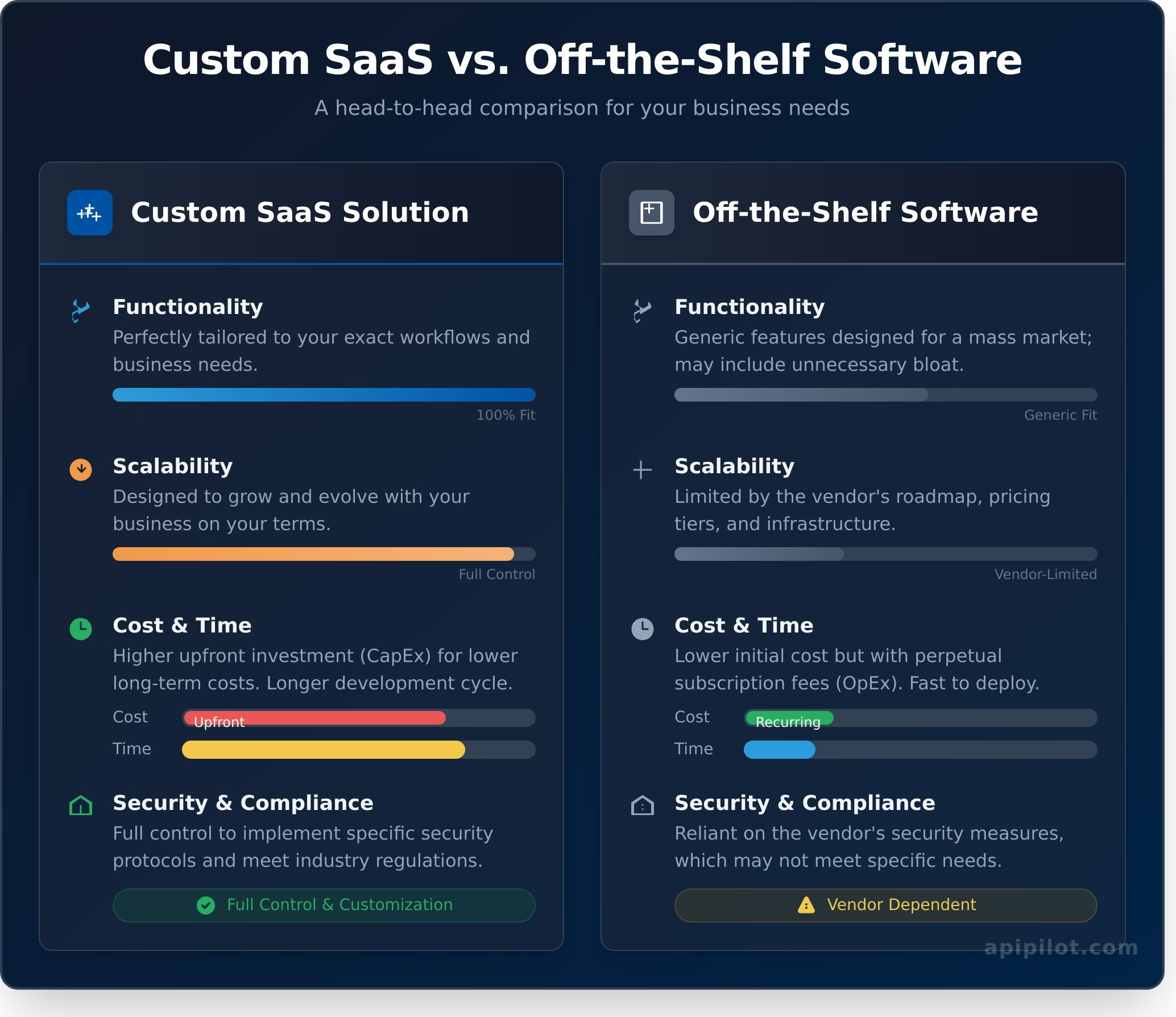
| Functionality | Perfectly tailored to your exact workflows and business needs. | Generic features designed for a mass market; may include unnecessary bloat. |
| Scalability | Designed to grow and evolve with your business on your terms. | Limited by the vendor’s roadmap, pricing tiers, and infrastructure. |
| Cost Structure | Higher upfront investment (CapEx) with lower long-term operational costs. | Lower initial cost but with perpetual subscription fees (OpEx). |
| Implementation Time | Longer development cycle, from several months to over a year. | Fast to deploy; can often be set up within days or weeks. |
| Security & Compliance | Full control to implement specific security protocols and meet industry regulations. | Reliant on the vendor’s security measures, which may not meet specific needs. |
Checklist: 5 Signs Your Business Needs a Custom SaaS Solution
How do you know when it’s time to stop trying to fit a square peg into a round hole? If you recognize your business in these scenarios, it’s a strong indicator that a custom solution is the right path forward.
- Your workflow is unique and no existing software fits. You’ve tried multiple off-the-shelf tools, but you’re constantly creating workarounds to accommodate your specific business processes.
- You need to integrate with multiple legacy or proprietary systems. Pre-built software often has limited integration capabilities, whereas a custom solution can be built to communicate seamlessly with your existing tech stack.
- Data security and compliance requirements are highly specific. Industries like healthcare (HIPAA) or finance have stringent regulations that generic software may not fully address, but a custom app can be built for compliance from the ground up.
- You plan to scale operations in a way off-the-shelf tools can’t support. Your growth trajectory requires a level of flexibility and performance that subscription-based tools, with their rigid pricing tiers and feature sets, simply cannot provide.
- The software itself is your core business idea and competitive advantage. If your innovation lies in a new type of software or digital service, building a custom application isn’t just an option-it’s the entire business.
Key Business Advantages of Building a Custom SaaS Application
Investing in a custom solution is about more than just getting the right features; it’s about creating a long-term strategic asset for your business. You move from simply renting a tool to owning a powerful engine for growth and efficiency.
Tailored Functionality for Maximum Efficiency
With a custom SaaS application, you build only the features you need, which eliminates confusing clutter and software bloat. This allows you to automate your most specific and complex business processes, reducing manual work and the potential for human error. The result is a highly intuitive, purpose-built interface that mirrors your team’s workflow, leading to faster user adoption and increased productivity across the board.
Unmatched Scalability and Flexibility
One of the most significant advantages of custom development is that your application grows and adapts in lockstep with your business needs. You are no longer at the mercy of a third-party vendor’s limited feature roadmap or forced into expensive plan upgrades for a single feature. A custom solution allows you to scale user capacity, add new functionalities, and pivot your strategy on your own terms and timeline.
Enhanced Security and Compliance
When you handle sensitive customer data or operate in a regulated industry, security cannot be an afterthought. Custom SaaS development gives you complete control to implement security protocols tailored to your specific data and operational risks. You can ensure full compliance with standards like GDPR, HIPAA, or PCI DSS from the initial architectural design. Ultimately, you control the data, the infrastructure, and all security measures, providing peace of mind for you and your clients.
The Custom SaaS Development Lifecycle: A Step-by-Step Roadmap
Building a custom application is a structured journey. Following a proven process ensures that projects stay on time, within budget, and are aligned with your business goals. From the initial idea to post-launch support, here’s what you can expect.
Step 1: Discovery and Strategy
This foundational phase is all about alignment. It involves in-depth workshops to define clear business goals, identify target user needs, and map out core functionalities. We conduct market research and competitive analysis to identify opportunities and risks, culminating in a detailed project scope and technical specification document that serves as the blueprint for development.
Step 2: UI/UX Design and Prototyping
With a clear strategy, the focus shifts to the user experience. Our designers create wireframes and user flows to map out the application’s structure and navigation. This is followed by high-fidelity UI design to craft an intuitive and visually appealing interface. Finally, we build interactive prototypes that allow you to click through the app and provide critical feedback before any code is written.
Step 3: Agile Development and Coding
This is where the vision becomes a reality. Our engineers develop the front-end (what the user sees) and the back-end (the server, database, and application logic). We build the core database and server architecture to be scalable and secure from day one. By working in “sprints”-short, iterative development cycles-we ensure continuous progress and provide regular opportunities for you to review and provide feedback.
Step 4: Quality Assurance (QA) and Testing
Parallel to development, our QA team performs rigorous testing to identify and eliminate bugs. This comprehensive process ensures that all performance, security, and usability standards are met. We test the application across different devices, browsers, and operating systems to guarantee a consistent and reliable experience for all users.
Step 5: Deployment and Launch
Once the application is fully developed and tested, we prepare for launch. This involves setting up the live server environment, whether on AWS, Google Cloud, or another platform. We handle data migration from legacy systems if needed and execute a carefully planned launch. After the application goes live, the focus shifts to attracting users, where automated SEO tools like getautoseo.com can be crucial for building online visibility and driving growth.
How to Choose the Right Custom SaaS Development Partner
The success of your custom SaaS project is critically dependent on the expertise and reliability of your development team. You need more than just a group of coders; you need a strategic partner who understands your business and is invested in your success.
Key Qualities to Look For in a Development Agency
- A strong portfolio of relevant, successful projects: Look for evidence that they have built applications of similar complexity and scale.
- Deep expertise in your required technology stack: Ensure they are proficient in the programming languages, frameworks, and cloud platforms best suited for your project.
- A transparent and collaborative communication process: They should provide clear, regular updates and treat you as an integral part of the development team.
- Positive client testimonials and case studies: See what past clients have to say about their experience and the results they achieved.
Why Partner with API Pilot for Your SaaS Project?
At API Pilot, we specialize in building scalable, secure, and enterprise-grade custom software that solves real-world business problems. Our global team of expert developers and strategists delivers high-quality solutions efficiently, ensuring you get the best value for your investment. We don’t just build software; we build strategic assets. Our process is rooted in a deep understanding of your business goals to ensure the final product delivers a tangible and positive return on investment. Discuss your project with our experts today.
Frequently Asked Questions
How much does custom SaaS application development cost?
The cost varies widely based on complexity, features, and the technology stack, typically ranging from $50,000 for a simple MVP to over $500,000 for a complex enterprise-level platform. The final price depends on the number of features, third-party integrations, and the size of the development team.
How long does it take to build a custom SaaS application?
A simple Minimum Viable Product (MVP) can be developed in 3-6 months. A full-featured, market-ready application often takes 9-12 months or longer. The timeline is influenced by the project’s scope, complexity, and the feedback and revision cycles.
What is a Minimum Viable Product (MVP) and why is it important?
An MVP is a version of your application with just enough core features to be usable by early customers who can then provide feedback for future product development. It’s a crucial strategy to validate your idea, reduce initial investment risk, and get to market faster.
What technology stack is best for a SaaS application?
The “best” stack depends on the project’s specific needs for scalability, performance, and features. Common choices include frameworks like React or Angular for the front-end, Node.js, Python, or Ruby on Rails for the back-end, and cloud platforms like AWS or Google Cloud for hosting.
Will I own the source code for my custom application?
Yes. When you partner with a reputable development agency like API Pilot, you retain 100% ownership of the intellectual property and the source code for the application developed for you.
Making the leap to custom software is a strategic move that can unlock unprecedented efficiency and growth. It’s about building a solution that not only solves today’s problems but also provides a flexible foundation for tomorrow’s opportunities. With expertise in enterprise-grade custom software and a proven track record of successful project delivery, our global team is ready to help you build the future of your business. Ready to build the software that powers your business? Get a free consultation.


