The line between a market-leading app and a costly failure often comes down to one critical decision: your development partner. For businesses built for speed and scale, the strategic advantage is clear. To outsource mobile app development is to unlock access to specialized global talent and accelerate your time-to-market. Yet, this path is not without risk. The fear of choosing the wrong team, losing control over quality, and facing budget overruns can paralyze progress and sink even the most brilliant concepts.
This definitive 2025 guide eliminates that uncertainty. We provide a robust, no-nonsense framework to navigate the entire process with confidence. You will learn how to vet and select a rock-solid technology partner, establish seamless communication workflows, and manage your project for a flawless launch. Prepare to move from managing developers to focusing on what truly matters: launching an enterprise-grade application that gives you a decisive competitive edge.
Why Outsource Mobile App Development? The Strategic Advantages
Deciding to outsource mobile app development is more than a line item on a budget; it’s a strategic move to accelerate growth and mitigate risk. This approach transforms the heavy capital expense of building an in-house team into a predictable operational expense. The modern business practice of outsourcing allows companies to tap into a global talent pool, gaining a significant competitive edge without the associated overhead. It allows your core team to focus on business strategy, marketing, and sales while seasoned professionals handle the technical execution.
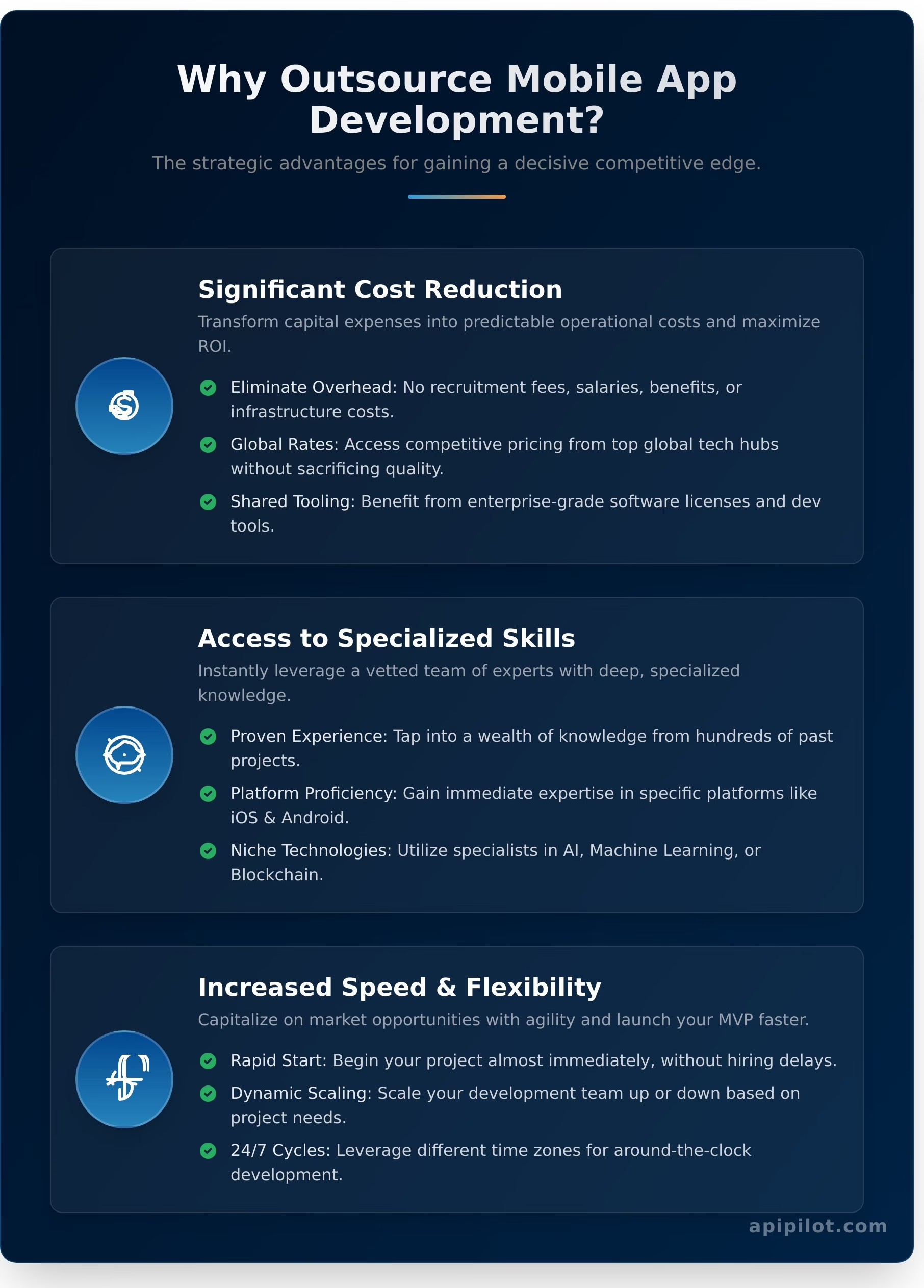
To visualize the core benefits of this model, consider this brief overview:
Significant Cost Reduction
The financial advantages are immediate and substantial. By partnering with an external development firm, you bypass the entire resource-intensive hiring cycle and the long-term costs of maintaining a full-time team. Key savings include:
- Elimination of Overhead: Forget recruitment fees, salaries, benefits, payroll taxes, and office infrastructure costs.
- Access to Global Rates: Leverage competitive pricing from established global tech hubs without sacrificing quality.
- Pay-for-Performance: You invest only in the productive development hours required for your project, ensuring maximum ROI.
- Shared Tooling Costs: Benefit from your partner’s existing enterprise-grade software licenses and development tools.
Access to Specialized Skills and Technology
Building a robust, scalable app requires a team with deep, specialized knowledge. Outsourcing provides instant access to a vetted team of experts who bring a wealth of experience from hundreds of past projects. You can immediately leverage proficiency in specific platforms like iOS and Android, or tap into niche technologies like AI, machine learning, or blockchain without a long, expensive learning curve for your internal staff.
Increased Speed and Flexibility
Market windows open and close with blazing-fast speed. Outsourcing gives your business the agility to capitalize on opportunities without the delay of a traditional hiring process. You can start your project almost immediately and scale your development team up or down based on project milestones and changing requirements. This flexibility, combined with the potential for around-the-clock development cycles across different time zones, allows you to launch your Minimum Viable Product (MVP) and iterate faster than the competition.
Before You Outsource: A 3-Step Preparation Checklist
Success when you outsource mobile app development is not a matter of luck; it is a direct result of meticulous preparation. A robust, well-documented plan is the single most critical factor, acting as the definitive blueprint for your project. This groundwork eliminates ambiguity, prevents costly scope creep, and ensures you can accurately compare quotes from potential partners. More importantly, it empowers your outsourced team to execute your vision with precision from day one.
Step 1: Define Your App’s Vision and Scope
Before writing a single line of code, your app’s core purpose must be crystal clear. This phase translates your business idea into an actionable plan that developers can understand and build. Focus on defining the fundamentals to create a rock-solid foundation for the entire project.
- Problem & Solution: Clearly articulate the specific user pain point your app solves.
- MVP Features: List the absolute minimum features required for a successful first launch. Resist the urge to add non-essential functionality at this stage.
- Target Audience: Identify your ideal users and map out their key journeys within the app.
- Monetization Strategy: Outline how the app will generate revenue (e.g., subscriptions, freemium model, in-app purchases, advertising).
Step 2: Prepare Essential Documentation
With a clear vision, the next step is to create the technical and visual documentation that will guide your development partner. These documents serve as the official source of truth, minimizing misunderstandings and ensuring everyone is aligned on the final product.
- Product Requirements Document (PRD): A comprehensive document detailing every feature’s functionality, technical specifications, and acceptance criteria.
- Wireframes or Mockups: Visual blueprints that illustrate the app’s user interface (UI) and user experience (UX), from basic layouts to high-fidelity designs.
- User Stories: Describe features from an end-user perspective to provide context (e.g., “As a new user, I want to sign up via my social account for quick access.”).
- Target Platforms: Specify whether you are building a native app for iOS, Android, or a cross-platform solution.
Step 3: Set a Realistic Budget and Timeline
A well-defined budget and a pragmatic timeline are the guardrails of a successful development project. This involves more than just estimating the initial build cost; it requires a holistic view of the total investment and a proactive approach to managing outsourcing risks. A clear financial plan prevents surprises and keeps the project on track.
- Research Costs: Investigate industry-standard rates for app development to establish a realistic budget baseline.
- Allocate Funds: Earmark funds for all project phases, including development, QA testing, platform deployment, and post-launch marketing.
- Include a Contingency: Set aside a contingency fund of 15-20% to cover unexpected changes or challenges.
- Establish Milestones: Define a target launch date and work backward to create a schedule with clear, achievable milestones for each development phase.
How to Find and Vet the Right Development Partner
Success when you outsource mobile app development is determined long before the first line of code is written. The selection process is not about finding the cheapest vendor; it’s about identifying a strategic partner who is technically proficient and genuinely invested in your product’s success. A thorough vetting process is your primary tool for mitigating risk and ensuring the final product is scalable, secure, and ready for market. Focus on evaluating three core areas: technical expertise, communication protocols, and project management maturity.
Choosing Your Outsourcing Model
Your partner’s location directly impacts cost, communication, and collaboration. Each model presents a distinct trade-off between budget and accessibility. Evaluate which structure best aligns with your project management style and financial constraints.
- Onshore: Highest cost. Located in your country, offering zero time zone friction and seamless communication.
- Offshore: Lowest cost. Significant time zone differences can create communication delays and potential cultural barriers.
- Nearshore: Moderate cost. Located in a neighboring country with minimal time zone differences, offering a balance of cost and collaboration.
- Blended-Shore (Hybrid): A flexible model that combines local project management with a global development team to optimize cost and efficiency.
Evaluating Portfolios and Case Studies
A portfolio is concrete proof of a team’s capabilities. Go beyond surface-level aesthetics and dig into the functional quality of their work. A strong portfolio demonstrates a history of delivering robust, high-performance applications.
- Analyze projects with similar complexity, features, or industry focus to yours.
- Download their live apps from the Apple App Store or Google Play. Test for speed, stability, and intuitive UI/UX.
- Read user reviews to get unbiased feedback on performance and bugs.
- Verify their exact role. Confirm if they were the sole developer or a small part of a larger project.
Crucial Questions to Ask Potential Partners
Before committing, get direct answers to questions that reveal their process, transparency, and professionalism. The quality of their answers is as important as the answers themselves.
- What is your development methodology (Agile, Scrum, Waterfall)? How do you adapt it to project needs?
- How do you manage project communication, progress reporting, and stakeholder feedback?
- Who owns the intellectual property and source code at the end of the contract?
- Can you provide references from 2-3 previous clients with similar projects?
Managing the Outsourcing Relationship for Long-Term Success
Successfully launching your application is a critical milestone, but it marks the beginning—not the end—of your partnership. When you outsource mobile app development, the ongoing health of the relationship dictates the long-term viability and scalability of your product. The key is to shift from a client-vendor dynamic to a truly integrated partnership. Treat your outsourced developers as a dedicated extension of your in-house team, fostering a culture of shared ownership and mutual success.
This requires establishing robust, no-nonsense processes from day one. To avoid communication bottlenecks and ensure alignment, designate a single, empowered point of contact on both your team and the development partner’s side. This creates clear channels for feedback, approvals, and issue resolution, ensuring a frictionless workflow.
Establishing Communication and Project Management
A disciplined communication cadence is non-negotiable for effective collaboration. Implement a framework that prioritizes clarity and accountability. This structure eliminates ambiguity and keeps the project on its critical path.
- Regular Cadence: Schedule daily stand-ups for quick updates and weekly deep-dives to review progress against milestones.
- Centralized Management: Utilize enterprise-grade tools like Jira, Trello, or Asana to track every task, bug, and feature from a single source of truth.
- Seamless Communication: Use platforms like Slack or Microsoft Teams for real-time collaboration and quick queries.
- Document Everything: Ensure all significant decisions, change requests, and approvals are documented in writing to maintain a clear audit trail.
Ensuring Code Quality and IP Protection
Protecting your intellectual property and ensuring a high-quality codebase are paramount. Before any work begins, put legally binding and technical safeguards in place. Insist on a comprehensive Non-Disclosure Agreement (NDA) and ensure your contract explicitly states that your company retains 100% ownership of all source code and related IP. For technical governance, implement regular code reviews, mandate the use of version control systems like Git, and budget for rigorous Quality Assurance (QA) and User Acceptance Testing (UAT) phases to deliver a rock-solid final product.
Handling Scope Creep and Post-Launch Support
Even the best-planned projects encounter change. To manage this effectively, establish a formal change request process. Any new feature or modification must be documented, and its impact on the project timeline and budget must be evaluated and approved before implementation. Furthermore, plan beyond the launch. Discuss and define a post-launch maintenance and support agreement to handle bug fixes, security patches, and OS updates. A clear plan ensures your app remains performant and secure long after its initial release. Our project managers are experts in building these robust frameworks. See how API Pilot ensures project success.
Understanding Costs and Engagement Models
When you decide to outsource mobile app development, cost and collaboration structure are mission-critical variables. The final price tag is not a single number but a dynamic result of your project’s scope, complexity, and the partnership model you choose. Selecting the right framework ensures a transparent, efficient, and scalable development process from start to finish.
Common Engagement Models Explained
The engagement model defines the financial and collaborative relationship with your development partner. Each model is built for different project requirements.
- Fixed Price: Best for smaller projects with a rock-solid, clearly defined scope and feature set. This model offers budget predictability but little flexibility for changes.
- Time & Materials (T&M): An agile-friendly model ideal for complex, long-term projects where requirements may evolve. You pay for the actual time and resources spent, offering maximum flexibility and transparency.
- Dedicated Team: A strategic partnership where you hire an entire development team that works exclusively on your project. This is the most robust model for large-scale products requiring continuous development and deep integration with your in-house operations.
Key Factors That Influence App Development Cost
The budget to outsource mobile app development is directly tied to the technical requirements and labor involved. Key cost drivers include:
- Project Complexity: The number of features, screens, business logic complexity, and third-party service integrations significantly impacts the timeline and cost.
- UI/UX Design: A simple, template-based design is cost-effective. A fully custom UI with complex animations, transitions, and interactive elements requires specialized skills and more development hours.
- Platform Choice: Building separate native apps for iOS and Android is the most expensive route. Cross-platform frameworks like React Native or Flutter can reduce costs by using a single codebase.
- Backend Infrastructure: A custom, scalable backend architecture is a major investment. Using a Backend-as-a-Service (BaaS) platform can accelerate development and lower initial costs.
Beware of Hidden Costs
A comprehensive budget accounts for more than just development hours. Factor in these ongoing and often overlooked expenses:
- Third-Party Services: Many apps rely on external APIs for maps, payments, or analytics, which may have subscription fees. A tool like apipilot.com can help manage and monitor API usage efficiently.
- Infrastructure & Hosting: Server space, database hosting, and content delivery networks (CDNs) are recurring operational costs.
- App Store Fees: Apple requires an annual fee for its Developer Program to publish and maintain apps on the App Store.
- Post-Launch Maintenance: Your budget must include ongoing support for bug fixes, OS compatibility updates, security patches, and feature enhancements.
Your Next Step: From Vision to High-Performance App
As we’ve explored, the decision to outsource mobile app development is a powerful strategic lever, providing access to specialized global talent and accelerating your time-to-market. Success hinges on meticulous preparation and selecting a partner who aligns with your technical and business goals. Choosing the right team is the most critical variable in the equation.
At API Pilot, we provide the robust technical expertise and strategic partnership required for success. Our global team, with offices in the US and Pakistan, has a proven track record of launching high-performance mobile applications. With deep expertise in both native and cross-platform development, we build scalable solutions engineered for growth and reliability.
Your vision deserves a world-class development team. Ready to build your app with a trusted partner? Get a Free Consultation with API Pilot and let’s build something powerful together.
Frequently Asked Questions
How much does it cost to outsource mobile app development?
The cost to outsource mobile app development is a function of complexity, features, and the team’s hourly rate. A simple MVP can range from $15,000 to $50,000. A more complex, enterprise-grade application with a robust back-end, multiple API integrations, and advanced UI/UX can easily exceed $150,000. Your final cost is determined by the project scope, technology stack, and the geographic location of your outsourced partner, which directly impacts rates.
Is it safe to outsource my app idea? How is my intellectual property protected?
Yes, outsourcing is secure when structured with the correct legal frameworks. Your intellectual property (IP) is protected through legally binding documents. Always execute a Non-Disclosure Agreement (NDA) before sharing project details. Your main contract, typically a Master Services Agreement (MSA), must explicitly state that all source code, design assets, and resulting IP are your exclusive property. Reputable agencies have rock-solid processes for ensuring client IP security and confidentiality.
What is the difference between onshore, offshore, and nearshore outsourcing?
These terms define the geographic location of your development team relative to your business. Onshore means hiring a team within your own country, offering seamless communication at the highest cost. Offshore involves partnering with a team in a distant country for significant cost savings, though it can introduce time zone challenges. Nearshore is a hybrid model, engaging a team in a neighboring country to balance cost-effectiveness with minimal time zone differences and strong cultural alignment.
How long does it typically take to build the first version of an app?
A Minimum Viable Product (MVP) with a core feature set typically requires 3 to 6 months for design, development, testing, and deployment. This timeline ensures a well-architected initial release. More complex applications with custom back-end infrastructure, third-party integrations, and extensive features can take 6 to 12 months or longer. A clearly defined project scope and an efficient agile development methodology are critical for predictable, on-time delivery.
What are the best countries to outsource mobile app development to?
The best countries to outsource mobile app development to depend on your priorities. Eastern Europe (e.g., Poland, Romania) is known for its highly skilled talent pool and competitive rates. Asia (e.g., India, Vietnam) offers significant cost advantages and a massive developer workforce, ideal for large-scale projects. Latin America (e.g., Brazil, Colombia) is a top nearshoring region for North American companies, providing an optimal balance of cost, talent, and time zone alignment.
Should I hire a freelancer or an agency for my app development?
This decision depends on your project’s scale and management needs. A freelancer is a cost-effective solution for small, well-defined tasks or augmenting an existing team. An agency provides a comprehensive, end-to-end service, including a project manager, designers, developers, and QA specialists. This ensures a more robust process, greater scalability, and a single point of accountability for delivering a high-performance, market-ready product from the ground up.
How do I manage an outsourced team in a different time zone?
Effective cross-zone management relies on a structured communication protocol and robust project management tools. Establish a daily or weekly sync-up call during the hours that overlap. Utilize platforms like Jira or Asana for transparent task tracking and asynchronous updates. Insist on clear, comprehensive documentation and regular progress reports. A reliable project manager on the outsourced team is essential for ensuring seamless workflow and efficient execution without constant oversight.