Choosing the right technology stack for your mobile application is one of the most critical decisions you’ll make. It impacts your budget, timeline, app performance, and long-term scalability. This guide is designed to demystify the two primary approaches—native and hybrid development—so you can understand the critical differences in performance, cost, and user experience to make the right, data-driven choice for your project.
Native vs. Hybrid: Understanding the Core Concepts
Before diving into a detailed comparison, it’s essential to understand what you’re trying to build and how these development paths fundamentally differ. The core choice comes down to this: are you building an app specifically for a single operating system (like iOS or Android), or are you building a single app that can run on both? This guide will help you choose the right path for your unique business goals, budget, and performance requirements.
What is Native App Development?
Native app development involves writing code using the specific programming language and tools designated for a particular platform. For iOS, this means using Swift or Objective-C, while for Android, it’s Kotlin or Java. The key benefit of this approach is that it delivers maximum performance and the best possible user experience, as the app has direct, unrestricted access to the device’s hardware and features. The primary drawback, however, is the higher cost and longer development time required to build and maintain two separate codebases for two different platforms.
What is Hybrid App Development?
Hybrid app development allows developers to build an application using a single codebase—typically with web technologies like HTML, CSS, and JavaScript—which is then wrapped in a native “shell” that allows it to run on both iOS and Android. The main benefit is significantly faster and cheaper development, as one team can manage a single codebase for both platforms. The trade-off comes in the form of potential performance limitations and a user interface that may feel less integrated with the native operating system compared to a true native app.
A Note on Cross-Platform Development
Modern frameworks like React Native and Flutter have blurred the lines between native and hybrid. They also use a “write once, run anywhere” philosophy but compile the code into near-native components, offering performance that is often indistinguishable from a true native app. For the sake of a clear comparison in this guide, we will group these powerful cross-platform solutions under the broader “hybrid” umbrella, as they share the core benefit of a single, unified codebase.
Key Decision Factors: A Side-by-Side Comparison
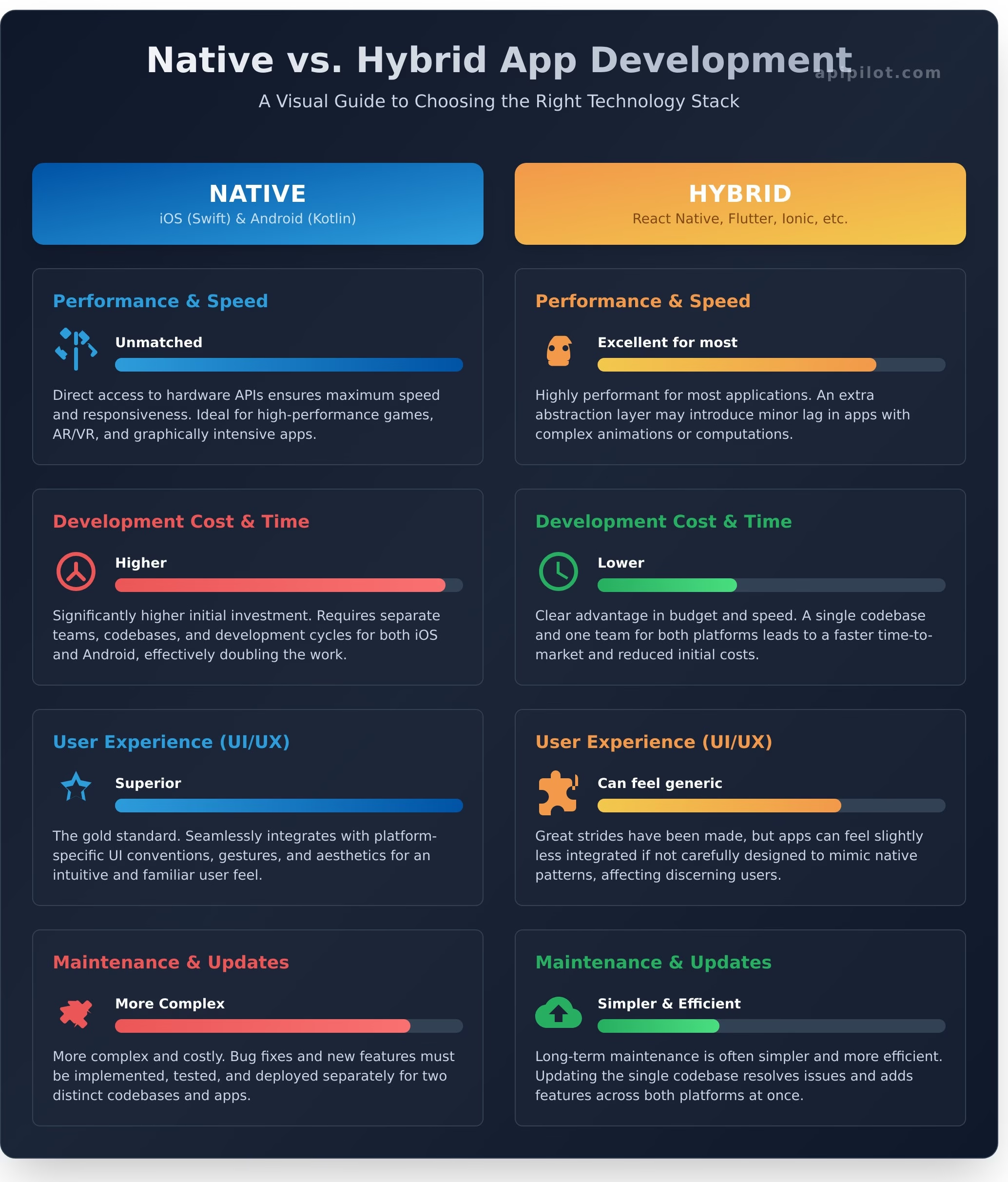
To make an informed decision, you need to weigh the most critical trade-offs between the two approaches. We’ve created a simple table to summarize the key points, helping you prioritize these factors based on your project’s primary goals. Use this section to compare how each method stacks up in the areas that matter most to your business.
| Decision Factor | Native Development | Hybrid Development |
|---|---|---|
| Performance & Speed | Unmatched. Direct access to hardware APIs for optimal speed and responsiveness. | Excellent for most apps, but can experience lag with heavy graphics or complex computations. |
| Development Cost & Time | Higher. Requires separate teams, codebases, and development cycles for iOS and Android. | Lower. One codebase and one team lead to faster time-to-market and reduced initial investment. |
| User Experience (UI/UX) | Superior. Seamlessly integrates with platform-specific UI conventions and gestures. | Can feel less integrated or generic if not carefully designed to mimic native patterns. |
| Maintenance & Updates | More complex. Bug fixes and new features must be implemented and deployed on two separate apps. | Simpler. Updating the single codebase can resolve issues and add features across both platforms at once. |
Factor 1: Performance & Speed
When it comes to raw performance, native development is the undisputed winner. Because native apps are built in the platform’s core programming language, they have direct access to hardware like the GPS, camera, and processor. This results in unmatched speed, stability, and responsiveness. Hybrid apps, while highly performant for most use cases, have an extra layer between the code and the operating system, which can introduce lag in graphically intensive applications, high-performance games, or apps with complex animations.
Factor 2: Development Cost & Time
Hybrid development holds a clear advantage in terms of budget and speed to market. Building on a single codebase means you can hire one team of developers to build for both iOS and Android simultaneously. This drastically reduces development hours and initial investment. Native development requires two separate codebases and often two distinct development teams, effectively doubling the work and associated costs to launch on both platforms.
Factor 3: User Experience (UI/UX)
For a premium, polished user experience, native development is the gold standard. Native apps inherently adopt the UI/UX conventions of their operating system, making them feel familiar and intuitive to users. They seamlessly integrate with platform-specific gestures, notifications, and visual aesthetics. While modern hybrid frameworks have made great strides in mimicking native components, there can still be subtle differences that make a hybrid app feel slightly out of place or generic to discerning users.
Factor 4: Maintenance & Updates
Long-term maintenance is often simpler and more efficient with a hybrid approach. When a bug needs fixing or a new feature needs to be added, your team only has to work on one codebase. Pushing an update can resolve the issue on both platforms simultaneously. With native apps, you must manage and deploy updates for two separate applications, which can complicate the release cycle and increase the potential for platform-specific bugs.
The Final Verdict: A Framework for Your Decision
Ultimately, there is no single “best” answer—only the best fit for your specific business needs, budget, and long-term goals. The right choice depends entirely on what you prioritize. Use this final checklist to match your project’s unique requirements to the most suitable technology path. When in doubt, building a small proof-of-concept can be an excellent way to test performance and validate your decision.
Choose Native Development If…
- Your app is a high-performance game or utilizes demanding technologies like Augmented Reality (AR) or Virtual Reality (VR).
- You need deep, instant access to the very latest device hardware features, such as advanced camera APIs or background processing.
- A premium, flawless, and platform-specific user experience is your number one priority and a key competitive advantage.
- Your application needs to perform complex calculations, data processing, or heavy computations directly on the device.
Choose Hybrid Development If…
- You need to launch a Minimum Viable Product (MVP) quickly to test a market or secure funding.
- Your budget is a primary constraint, and you need to maximize your return on the initial development investment.
- Your app is primarily for content display, such as a news feed, event schedule, or simple e-commerce storefront.
- Your main goal is to reach the widest possible audience on both iOS and Android simultaneously with a single product launch.
Let API Pilot Guide Your App Development Journey
Making the right technical decision at the outset is crucial for the long-term success of your mobile application. At API Pilot, our experts have extensive experience building robust, high-performance applications on all platforms. We understand the nuances of both native and cross-platform development and can help you navigate these complex choices. We don’t just write code; we build powerful, scalable digital assets that are strategically aligned with your business objectives.
How We Help You Choose
- We start by conducting a deep analysis of your business goals, target audience, and user stories.
- Based on your specific needs, we recommend the optimal technology stack that balances performance, cost, and scalability.
- We provide a clear, transparent development roadmap and detailed pricing so you know exactly what to expect.
- Ready to start the conversation? Schedule a free app strategy session with our experts.
Whether you need the unparalleled performance of a native app or the speed and efficiency of a cross-platform solution, our team is ready to transform your vision into a robust, market-ready product. Choosing the right development path sets the foundation for your success. Have an app idea? Let’s build it right. Get a free quote.