Off-the-shelf software can only take your business so far. When generic solutions create more bottlenecks than they solve, it’s time to build a tool that delivers a true competitive advantage. But the path to a robust, scalable application is fraught with risk—from opaque development processes and budget overruns to the paralyzing fear of choosing the wrong technical partner. A failed project isn’t just a financial loss; it’s a critical setback in a competitive market. The success of your entire initiative hinges on one crucial decision: selecting the right custom software development company.
This comprehensive guide demystifies the process. We provide a rock-solid framework for navigating every stage, from identifying the precise moment you need to build to rigorously vetting potential partners and understanding complex cost structures. By the end, you’ll have the strategic insight needed to forge a reliable, long-term technology partnership, streamline your business operations, and ensure your project is a success from day one. Let’s build something powerful.
When to Choose Custom Software (And When Not To)
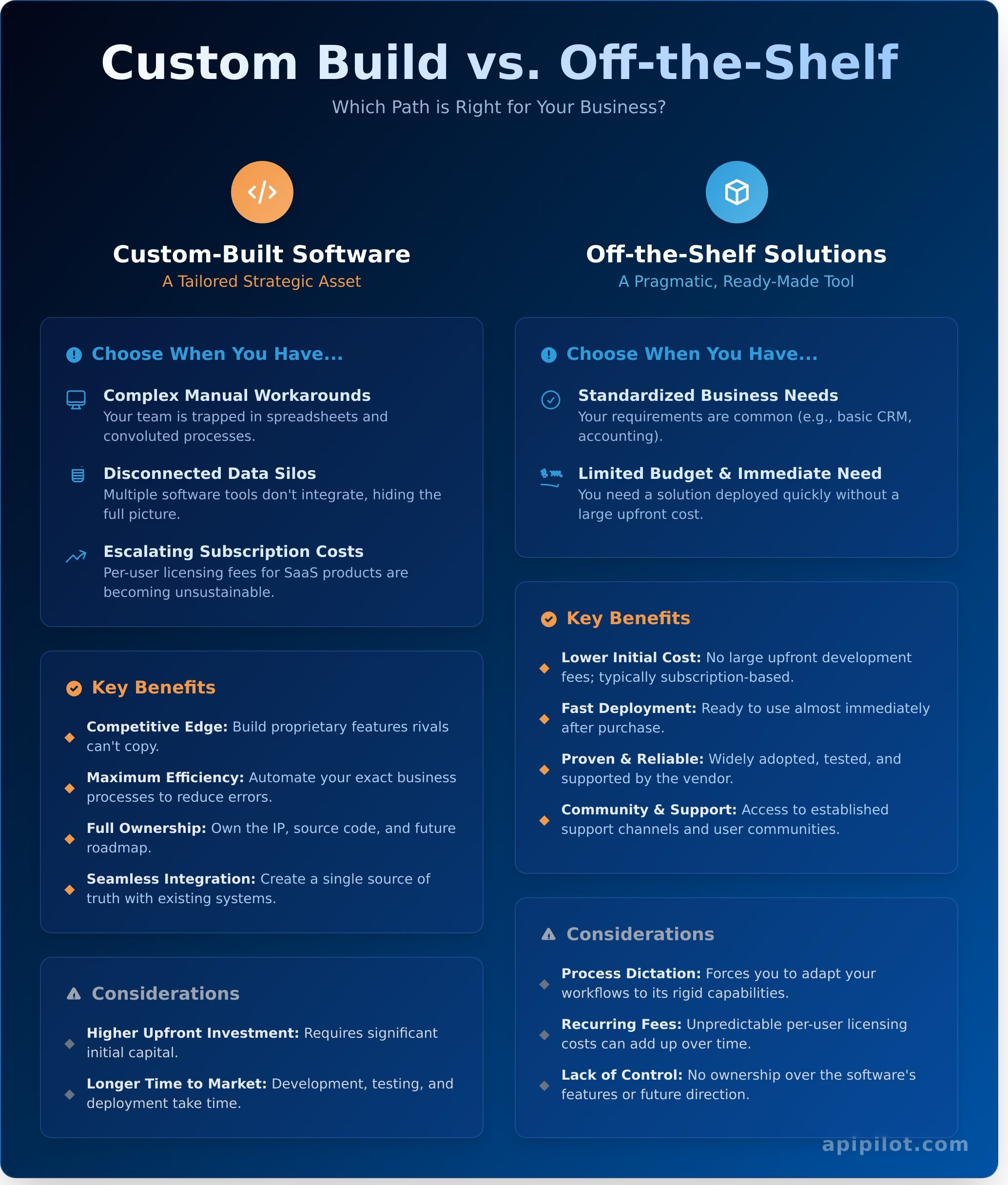
The decision to build custom software versus buying an off-the-shelf solution is a critical inflection point for any growing business. The right choice hinges on a clear-eyed analysis of your core business processes, total cost of ownership (TCO), and long-term strategic goals. Before you start looking for a custom software development company, you must first determine if you have a unique problem that a generic solution cannot solve efficiently.
To help frame this decision, the following video provides a high-level overview of the key considerations involved.
Signs You’ve Outgrown Off-the-Shelf Solutions
Existing software can become a bottleneck rather than a tool for growth. If your team experiences these issues, it’s a strong indicator that you need a tailored solution:
- Manual Workarounds: Your team relies on complex spreadsheets, manual data entry, and convoluted processes to bridge gaps in functionality.
- Data Silos: You use multiple software tools that don’t integrate, preventing a unified view of your business operations and creating inefficiencies.
- Escalating Costs: High per-user licensing fees for a SaaS product are becoming a significant and unpredictable operational expense as your team scales.
- Process Dictation: The software’s rigid limitations force you to adapt your workflows to its capabilities, rather than the other way around.
The Strategic Value of Custom-Built Software
Investing in custom software is about more than just solving a problem; it’s about building a long-term asset that drives enterprise value. The primary benefits include:
- Competitive Edge: Develop proprietary features and workflows that your rivals, who are using the same off-the-shelf tools, cannot replicate.
- Maximum Efficiency: Automate your exact business processes to eliminate manual tasks, reduce errors, and achieve 100% workflow optimization.
- Full Ownership: You own the intellectual property and source code. This grants you full control over the entire software development process, your data, and the future roadmap.
- Seamless Integration: Build a robust system that integrates perfectly with your existing tech stack and any necessary third-party APIs, creating a single source of truth.
When an Off-the-Shelf Tool is the Smarter Choice
Custom development is not always the answer. A pre-built solution is often the most pragmatic and cost-effective choice in these scenarios:
- Standardized Needs: Your requirements are common for your industry (e.g., basic accounting, CRM, or project management) and are well-served by market leaders.
- Immediate Need & Limited Budget: You need a solution deployed quickly and lack the capital for the upfront investment required for custom development.
- Proven Solutions Exist: The market already offers a powerful, reliable, and widely adopted SaaS product that effectively solves your specific problem.
Core Services a Top Development Company Offers
A premier custom software development company delivers far more than just code; they provide end-to-end solutions engineered for business impact. This means moving beyond simple programming to encompass strategic planning, system architecture, and robust project management. A true partner can guide you through the entire Software Development Lifecycle (SDLC), from initial concept to deployment and post-launch support. Their services should directly map to your core objectives, whether that’s accelerating growth, scaling operations, or boosting efficiency.
Look for a partner with proven expertise across these critical domains:
Custom Enterprise Software Development
Enterprise-level challenges demand enterprise-grade solutions. A competent firm builds robust systems tailored to your unique operational needs. This includes:
- Building Custom Systems: Developing tailored CRM, ERP, or Supply Chain Management (SCM) platforms that align perfectly with your business processes.
- Automating Workflows: Engineering solutions to automate complex internal tasks, reducing manual effort and minimizing human error.
- Centralizing Data: Creating a single source of truth to power better decision-making and provide a unified view of your operations.
Mobile App Development (iOS & Android)
In a mobile-first world, a powerful application is non-negotiable. A top development partner offers comprehensive mobile services to connect you with users wherever they are. Key offerings include:
- Customer-Facing Apps: Creating high-performance native or cross-platform applications designed to engage your target audience and drive revenue.
- Internal Workforce Tools: Developing secure internal apps that empower your mobile teams with the data and functionality they need on the go.
- UX/UI Design: Focusing on intuitive user experience (UX) to drive user adoption, satisfaction, and long-term loyalty.
This focus on engagement is paramount in all user-facing applications, from enterprise tools to the highly creative field of video game development. For a look into how a specialized game studio approaches building immersive digital products, you can read more.
Web & E-commerce Platform Development
Your web presence is often the first point of contact with a customer. An elite custom software development company ensures this interaction is seamless, secure, and scalable. Their expertise covers:
- Web Applications: Crafting high-performance, scalable websites and complex web applications built for rock-solid reliability.
- E-commerce Solutions: Building custom e-commerce platforms or extending systems like Shopify and Magento for a tailored shopping experience.
- Performance & Security: Ensuring every platform is secure, fast-loading, and optimized for conversions to maximize your ROI.
The Development Process: A Blueprint for Success
A top-tier custom software development company operates on a structured, transparent process. This isn’t about rigid bureaucracy; it’s a proven blueprint to mitigate risk, align development with your business goals, and deliver a high-quality product on time. Modern development is a collaborative partnership built for flexibility. Your active involvement in feedback loops is critical, and the partnership doesn’t end at launch—it extends to robust, ongoing support.
Phase 1: Discovery, Strategy, and Architecture
This foundational phase translates your vision into an actionable technical plan. Through collaborative workshops, we define clear business goals, project scope, and key performance indicators (KPIs). These requirements are structured into user stories and journey maps, which inform the creation of a robust technical architecture designed from the ground up for scalability, performance, and rock-solid security.
Phase 2: UI/UX Design and Prototyping
Here, the application’s user-facing elements take shape. The process begins with low-fidelity wireframes to map out core layouts, evolving into interactive prototypes for early user testing. This de-risks the development phase by gathering crucial feedback before a single line of code is written. This phase culminates in a finalized design system that guarantees a consistent, intuitive, and seamless user experience across the platform.
Phase 3: Agile Development and Quality Assurance
This is where the architectural blueprint becomes a functional product. Development proceeds in short, iterative cycles known as ‘sprints’. This approach, central to the Agile methodology, allows for maximum flexibility to adapt to changing requirements. At the end of each sprint, you see a live demo of the progress, ensuring complete transparency. Rigorous manual and automated testing is integrated throughout to build a reliable, bug-free application.
Phase 4: Deployment, Launch, and Support
The final stage is a carefully managed transition from development to a live environment. A professional custom software development company will handle the entire deployment process, followed by intensive post-launch monitoring to ensure optimal performance and stability. A true partner provides ongoing support, including performance tuning, security updates, and a clear roadmap for future feature enhancements.
How to Choose the Right Development Partner: A 7-Point Checklist
Selecting a development partner is the most critical decision you’ll make—more so than choosing a specific technology. The right team offers a powerful blend of technical skill, business acumen, and seamless communication. Avoid the trap of focusing solely on the lowest price; instead, evaluate the overall value. This is a long-term investment in your business’s future, and your choice of a custom software development company will directly impact your success.
Use this checklist to systematically vet potential partners and find one that provides a rock-solid foundation for growth.
- Verify Industry Experience and Past Work. A strong portfolio is essential. Look for a development team with direct experience in your industry or with projects of similar complexity. Ask for live demos, not just screenshots, to see their work in action.
- Demand Proof of ROI. Don’t settle for vague promises. The best partners provide case studies with concrete metrics showing how their software solved a business problem and delivered measurable value. Ask for client references you can speak with directly.
- Assess Technical Stack Alignment. Ensure their preferred technologies are modern, scalable, and a good fit for your long-term product roadmap. A mismatch here can lead to costly refactoring. The goal is a robust, future-proof architecture capable of seamless integration with third-party services.
- Scrutinize Security and Compliance Protocols. How do they approach data protection? Ask about their processes for secure coding, vulnerability scanning, and compliance with regulations like GDPR or HIPAA. This is a non-negotiable part of any enterprise-grade development project.
- Evaluate Project Management and Communication. A frictionless workflow requires transparent communication. Confirm you’ll have a dedicated point of contact, a predictable schedule for updates (e.g., daily stand-ups, weekly reports), and proficiency with standard tools like Jira and Slack.
- Clarify Intellectual Property Ownership. This is critical. The contract must state, without ambiguity, that you own 100% of the source code and all intellectual property upon final payment. Do not proceed if this clause is missing or unclear.
- Demand Transparent Pricing and Contracts. Whether you choose a Fixed Price or Time & Materials (T&M) model, the billing structure must be completely transparent. Look for clear terms, detailed statements of work, and absolutely no hidden fees.
Decoding the Costs: Pricing Models and Key Factors
Understanding the cost of custom software development goes beyond a single price tag. It’s a dynamic figure driven by project complexity, feature scope, and the size of the engineering team. The pricing model you choose is a critical component of your partnership agreement, and it should align perfectly with your project’s needs for clarity and flexibility. A premier custom software development company will act as a strategic partner, helping you select the model that minimizes risk and maximizes value.
Most development partners operate on one of three primary models. Understanding the mechanics of each is essential before signing a contract.
Fixed Price Model: For Well-Defined Projects
This model is best suited for smaller projects with a crystal-clear and fully documented scope. It provides maximum financial predictability from the outset.
- Pros: The budget is predictable, and a firm deadline is established upfront, making financial planning straightforward.
- Cons: It is highly inflexible. Any deviation or change request typically requires a new round of scope definition and contract renegotiation, which can cause delays.
Time & Materials (T&M) Model: For Evolving Projects
Ideal for complex, long-term projects where requirements are expected to evolve. With T&M, you pay for the actual time and resources spent by the development team, offering the agility needed to adapt.
- Pros: This model offers maximum flexibility to pivot, incorporate feedback, and adapt to changing market demands. It is perfectly suited for agile development.
- Cons: The final budget is not fixed, which requires a high degree of trust and transparent monitoring to manage costs effectively.
Dedicated Team Model: For Long-Term Partnership
For businesses seeking a long-term, integrated development capability, this model provides a full team of specialists who work exclusively on your projects as a seamless extension of your in-house staff.
- Pros: The team develops deep domain knowledge, giving you maximum control over the process and ensuring consistent, predictable output.
- Cons: This is the highest-cost option and requires significant management and product ownership oversight from your side.
Why API Pilot is Your Ideal Development Partner
Choosing the right model is simpler with the right partner. At API Pilot, we don’t just write code; we build strategic assets. We combine robust, enterprise-grade engineering with a consultative approach to ensure the final product delivers tangible business results. Our agile process guarantees complete transparency, keeping you aligned with project progress and goals every step of the way. We specialize in building scalable, secure, and high-performance solutions, from sophisticated mobile apps to powerful enterprise platforms. Let’s build your next big idea together. Get in touch!
Transform Your Vision into a Robust Software Solution
Choosing to build custom software is a powerful strategic move, but its success hinges entirely on selecting the right custom software development company. This guide has equipped you with a blueprint for making that critical decision—from identifying when custom software is the optimal choice to vetting partners with a structured checklist. A methodical approach is your greatest asset in finding a team that aligns perfectly with your technical requirements and business goals.
At APIPilot, we are engineered to be that partner. We combine deep expertise in mobile, web, and enterprise solutions with a client-centric, Agile development process. Our global delivery model, with offices in the US and Pakistan, provides a seamless and efficient path to building powerful, scalable applications that deliver tangible results and a rock-solid return on investment.
Ready to move from blueprint to reality? Schedule a Free Consultation to Discuss Your Project and discover how our team can accelerate your success.
Frequently Asked Questions
How long does it take to build a custom software application?
The timeline for building custom software varies based on project complexity, feature set, and integration requirements. A Minimum Viable Product (MVP) can often be delivered in 3-6 months by a capable custom software development company. A full-scale, enterprise-grade application with robust features may take 9-12 months or longer. We provide a detailed project roadmap with clear milestones after the initial discovery phase, ensuring a predictable and efficient development lifecycle.
Who will own the intellectual property and source code for my project?
You, the client, will have 100% ownership of the intellectual property and the complete source code. This is a non-negotiable standard for all our projects. Upon final payment, we transfer all code, documentation, and related IP assets to you. This is explicitly detailed in our service agreement, providing you with complete legal clarity and control over your proprietary software. Your ownership is absolute and guaranteed from the start.
What is a ‘tech stack’ and why is it important?
A ‘tech stack’ is the combination of programming languages, frameworks, libraries, and tools used to build and run an application. It’s the foundation of your software. Choosing the right stack is critical for achieving key objectives like scalability, blazing-fast performance, and long-term maintainability. Our experts select a robust and modern stack tailored to your specific business goals and technical requirements to ensure a future-proof solution.
How do you ensure the quality and security of the software you build?
We build rock-solid, secure software through a multi-layered quality assurance process. This includes rigorous peer code reviews, comprehensive automated testing (unit, integration, and end-to-end), and CI/CD pipelines to catch issues early. For security, we adhere to best practices like the OWASP Top 10, conduct regular vulnerability scanning, and implement robust data encryption, ensuring your application is both powerful and protected against threats.
What level of involvement will be required from my team during the process?
Your team’s active involvement is crucial for a successful outcome. We operate on an Agile methodology, requiring a dedicated point of contact (typically a Product Owner) from your side. This person will participate in regular sprint planning and review meetings, provide timely feedback on deliverables, and help prioritize the feature backlog. This collaborative approach ensures the final product is perfectly aligned with your business vision and user needs.
Can you take over an existing project that was started by another company?
Yes, we can efficiently take over existing software projects. The process begins with a comprehensive discovery phase, including a thorough source code audit, documentation review, and an assessment of the current architecture. This allows us to identify technical debt, security vulnerabilities, and scalability issues. Based on this audit, we deliver a clear, actionable plan to stabilize the project, implement new features, and ensure its long-term success.