Your groundbreaking idea for a web application is ready. But the path from concept to a market-ready product is filled with critical decisions, and none is more pivotal than choosing your technology partner. Selecting the wrong web application development company can lead to blown budgets, missed deadlines, and a final product that fails to scale or secure user data—a founder’s worst nightmare. The challenge isn’t just finding a team that can code; it’s finding a strategic partner that can transform your vision into a robust, high-performance digital asset.
This founder’s guide is engineered to eliminate that uncertainty. We provide a clear, actionable framework for evaluating potential partners, from assessing technical capabilities and development methodologies to understanding their approach to project management and long-term support. You will learn how to translate your business goals into clear technical requirements and confidently select a team that will deliver a secure, scalable product. Get ready to build a powerful application that drives real business growth and ensures a positive return on your technology investment.
First Principles: When to Hire a Web Application Development Company
Making the decision to build a custom web application is a significant strategic investment. Before you begin the search for a web application development company, it’s critical to establish whether custom development is the right path for your business. The first step is understanding the fundamental difference between a standard website and a robust web application.
This video provides a clear overview of the factors to consider when making your selection:
Website vs. Web Application: A Clear Distinction
Think of a standard website as a digital brochure; its primary purpose is to inform. It presents static content like company information, blog posts, and contact details. A web application, in contrast, is a business engine designed to perform tasks. It is interactive, processing user input and manipulating data to deliver dynamic results, such as a CRM managing customer data or a booking platform processing reservations. For a detailed technical overview, explore this primer on What is web application development?, but the core distinction is simple: a website shows, while a web application does.
Decision Framework: Off-the-Shelf vs. Custom Development
Choosing between a ready-made Software-as-a-Service (SaaS) solution and a custom build requires a clear-eyed assessment of your long-term goals. Off-the-shelf software is excellent for standard business functions where speed and low initial cost are priorities. However, when your core operations provide a unique competitive advantage, a custom web application becomes a non-negotiable asset. It is engineered specifically to support and scale your unique processes.
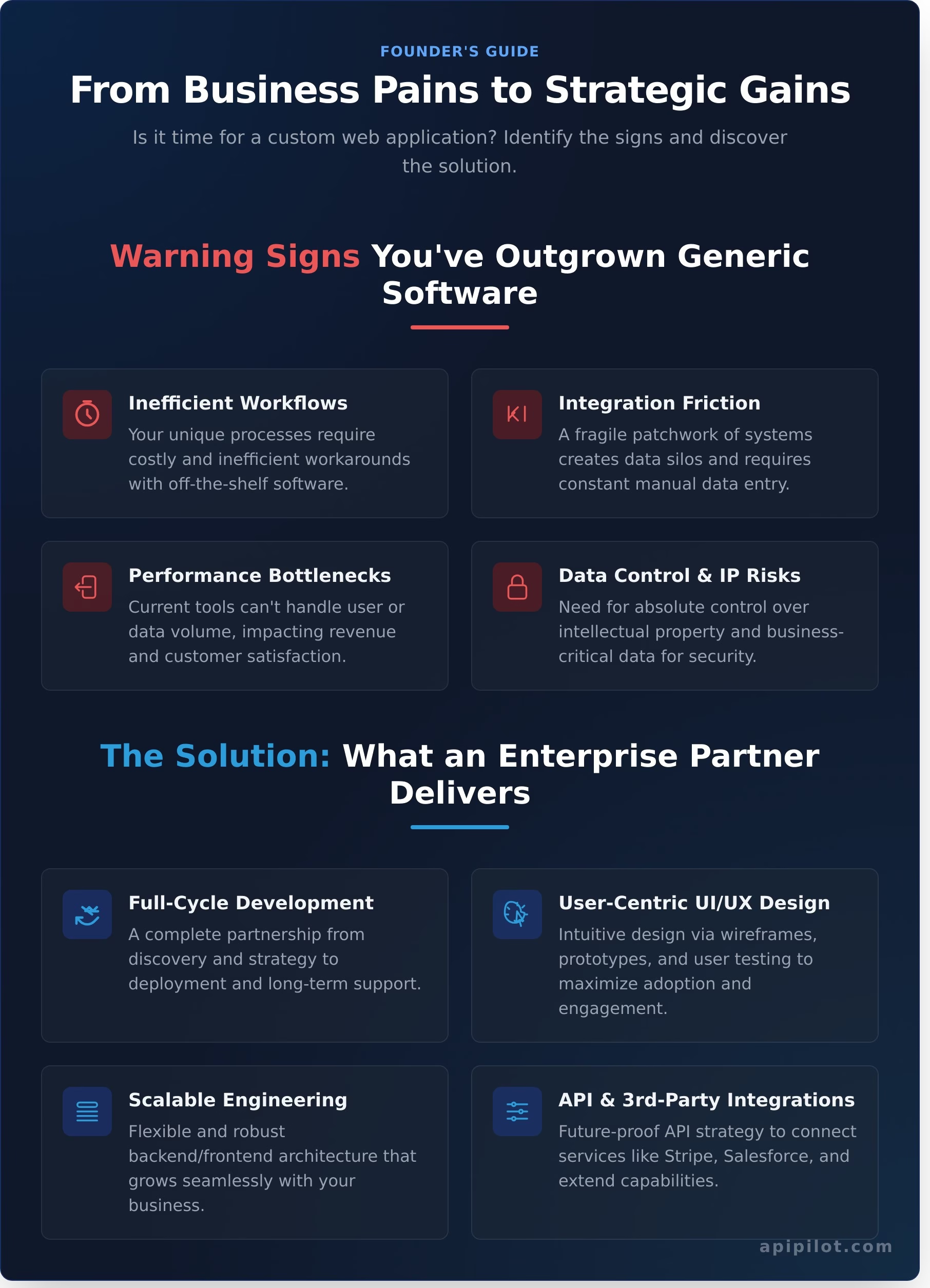
Signs You’ve Outgrown Generic Solutions
The need to partner with a web application development company often becomes apparent when existing tools create more problems than they solve. Key triggers include:
- Unique Processes: Your internal workflows are so specialized that no off-the-shelf software can support them without inefficient and costly workarounds.
- Integration Friction: You rely on a fragile patchwork of disparate systems that don’t communicate effectively, leading to data silos and manual data entry.
- Performance Bottlenecks: Your current software cannot handle your growing volume of users or data, causing slowdowns that directly impact revenue and customer satisfaction.
- IP and Data Ownership: You need to own your application’s intellectual property and maintain absolute control over your business-critical data for security and compliance.
Core Services to Expect from an Enterprise-Grade Partner
An elite web application development company does more than write code. They deliver a comprehensive, end-to-end partnership designed to achieve specific business outcomes. The process should be a transparent journey from initial concept to long-term success, covering strategy, design, engineering, deployment, and ongoing support. This holistic approach ensures your digital product is not only technically sound but also strategically aligned with your growth objectives.
Full-Cycle Development: From Strategy to Support
A true partnership begins with a deep-dive discovery phase to define your goals, project scope, and key performance indicators (KPIs). This strategic foundation ensures the final product solves the right problems. Post-launch, the relationship continues with robust support and maintenance plans, guaranteeing your application remains secure, performant, and relevant for years to come. This is a collaborative effort, not a one-time transaction.
User-Centric UI/UX Design
An application’s success hinges on user adoption. Intuitive UI/UX design is non-negotiable. The process moves from wireframes and interactive prototypes to rigorous user testing, ensuring every interaction is seamless and efficient. A clean, user-centric interface directly translates to higher engagement, reduced user churn, and improved conversion rates, maximizing your return on investment.
Scalable Backend and Frontend Engineering
A robust web application requires excellence on two fronts. The backend is the powerful engine driving your application’s logic, data processing, and security. The frontend is the responsive, high-performance interface your users interact with. A top-tier web application development company builds a flexible, scalable architecture for both, ensuring your platform can grow seamlessly with your business demands without costly re-writes.
API Development and Third-Party Integrations
APIs are the critical connectors that allow your application to communicate with other software and services. This enables powerful functionality like payment processing (Stripe), CRM synchronization (Salesforce), or marketing automation. A well-designed API strategy not only extends your application’s capabilities but also future-proofs it for new integrations and opportunities. See how our API-first approach creates future-proof solutions.
The Ultimate 5-Point Checklist for Evaluating Companies
Selecting the right web application development company is the most critical decision you will make. Move beyond the sales pitch and demand tangible evidence of expertise. A robust evaluation process examines a potential partner’s work, process, people, and pricing structure. This checklist provides a clear, objective framework to compare vendors and identify the one truly equipped to build a high-performance, scalable product for your business.
1. Analyze Their Portfolio & Relevant Case Studies
A strong portfolio is non-negotiable; it demonstrates proven experience, not just claims. Look for projects that mirror your own in technical complexity, scale, or industry vertical. Go deeper by analyzing their case studies. A quality case study moves beyond screenshots and details the initial business problem, the engineered solution, and the measurable results, such as ROI, user engagement metrics, or performance improvements.
2. Scrutinize Their Development Process & Communication
A transparent and efficient process is the backbone of a successful project. A competent partner will follow a clear methodology like Agile or Scrum to ensure iterative progress and flexibility. Ask critical questions about their workflow:
- How do they manage project timelines and deliverables? (e.g., Jira, Trello)
- What is the cadence for communication and demos? (e.g., daily stand-ups, weekly reviews)
- What is their protocol for handling scope changes and implementing feedback?
3. Assess Their Technical Expertise & Tech Stack
Ensure the company’s technology stack aligns with your project’s long-term needs for scalability, security, and performance. A top-tier partner won’t just use the tech they know; they will recommend the right tools for the job. Inquire specifically about their team’s expertise in core areas like cloud infrastructure (AWS, Azure), DevOps practices for seamless deployment, and implementing robust security protocols to protect user data.
4. Verify Client Reviews and Testimonials
Go beyond the curated testimonials on their website. Investigate third-party review platforms like Clutch, G2, or GoodFirms for unbiased feedback. For high-stakes projects, ask for 2-3 client references you can speak with directly. When reviewing feedback, pay close attention to comments about their communication, reliability, and project management skills, as these are often the differentiators between a good and a great development partner.
5. Evaluate Their Pricing and Engagement Model
Finally, demand absolute clarity on pricing. Whether it’s a fixed-price contract, a time-and-materials agreement, or a dedicated team model, you must understand exactly what is included. Ask for a detailed breakdown of costs and be wary of vague estimates. A trustworthy web application development company will provide a transparent pricing structure that eliminates ambiguity and prevents unexpected costs down the line.
The API Pilot Development Lifecycle: A Transparent Partnership
Choosing the right web application development company means selecting a partner with a proven, transparent process. We’ve engineered our development lifecycle to eliminate ambiguity, minimize risk, and deliver value at maximum velocity. Our approach is a collaborative partnership where you are involved at every critical stage, from initial concept to final deployment. We focus on delivering working software in iterative sprints, allowing for continuous feedback and ensuring the final product precisely meets your business objectives.
Phase 1: Discovery & Strategic Roadmapping
Success begins with a shared understanding. We initiate every project with in-depth discovery workshops to align on your business goals, user personas, and technical challenges. This collaborative phase produces a comprehensive project scope, a detailed technical specification, and a strategic product roadmap. This foundational alignment is critical for building the right product, on time and on budget.
Phase 2: UI/UX Design & System Architecture
Before a single line of code is written, we visualize the entire user experience. Our design team creates high-fidelity, interactive prototypes so you can see and feel how your application will work. Simultaneously, our engineers architect a robust, scalable, and secure backend system designed for performance. You provide final approval on the complete design and technical blueprint before development commences.
Phase 3: Agile Development & Quality Assurance
We build your application using an agile methodology, breaking down development into focused two-week sprints. At the end of each sprint, we deliver a demonstrable piece of working software for your review. Quality assurance isn’t an afterthought; it’s integrated directly into the development cycle with rigorous automated and manual testing. You maintain full visibility into our progress through shared project management tools.
Phase 4: Deployment & Post-Launch Support
Launching your application is a critical milestone we manage with precision. Our team handles the entire deployment process to your chosen cloud environment, whether it’s AWS, Google Cloud, or Azure. After launch, we transition from builders to partners, offering flexible support and maintenance plans to ensure rock-solid performance. We are committed to your long-term success through future enhancements and scaling. Ready to start your project? Let’s build your roadmap together.
From Vision to Launch: Your Next Steps
Selecting the right development partner is one of the most critical decisions a founder can make. You now have the framework to define your project’s scope, identify the core services of an enterprise-grade firm, and apply a rigorous evaluation checklist. The goal is not just to hire a vendor, but to secure a strategic partner committed to your long-term success and technical excellence.
At API Pilot, we embody these principles. As a leading web application development company, we deliver robust, scalable solutions built on a foundation of complete transparency. Our portfolio of enterprise-grade custom software is a testament to our capabilities, delivered by a global team that balances cost-effective execution with uncompromising quality. Our agile development process ensures you are a true partner in the build, not just a spectator.
Ready to transform your vision into a high-performance reality? Take the definitive next step. Schedule a free consultation to discuss your project and let’s build something powerful together.
Frequently Asked Questions
How much does it cost to develop a custom web application?
The cost is directly tied to project complexity, features, and the technology stack. A simple MVP might start around $25,000, while a complex, enterprise-grade application with multiple integrations can exceed $150,000. We provide a detailed, transparent estimate after an initial technical discovery phase. This ensures you have a precise budget forecast based on your specific requirements, eliminating ambiguity and focusing resources on core functionality for maximum ROI.
What is the typical timeline for web application development?
Timelines are contingent on scope. A Minimum Viable Product (MVP) with core features can be delivered in 3-4 months. A full-featured, scalable web application typically requires 5-9 months for development, rigorous testing, and deployment. We prioritize an efficient development cycle, utilizing agile sprints to deliver functional increments rapidly. This approach provides consistent progress visibility and allows for iterative feedback, ensuring the final product aligns perfectly with your strategic goals.
What is your development methodology, and how does it benefit my project?
We employ a robust Agile methodology, primarily using the Scrum framework. This iterative approach breaks down the project into manageable two-week sprints, each delivering a functional piece of the application. This benefits you by providing maximum transparency, frequent opportunities for feedback, and the flexibility to adapt to changing requirements. The result is a faster time-to-market, reduced risk, and a final product that is precisely aligned with your business objectives.
Will I own the source code and intellectual property for my application?
Absolutely. Upon final payment, you receive 100% ownership of the source code and all intellectual property rights. We believe in complete transparency and partnership. All code, databases, designs, and project-related documentation become your exclusive assets. Our agreements are structured to ensure there is no ambiguity, providing you with full control and legal ownership of your powerful new web application.
How do you ensure the security of the web application and my data?
Security is a core component of our development lifecycle, not an afterthought. We implement enterprise-grade security protocols, including secure coding practices (OWASP Top 10), data encryption in transit (SSL/TLS) and at rest, and robust access control mechanisms. Regular security audits and vulnerability scanning are standard procedures to proactively identify and mitigate threats, ensuring your application and user data remain rock-solid and protected.
What kind of post-launch maintenance and support do you provide?
We offer comprehensive, scalable post-launch support and maintenance packages to ensure your application operates at peak performance. These services include proactive monitoring, security patching, bug fixes, performance optimization, and feature enhancements. We provide tiered Service Level Agreements (SLAs) tailored to your needs, guaranteeing rock-solid uptime and a dedicated team to address any technical issues swiftly and efficiently, protecting your investment long-term.
How do you handle communication and project management with clients?
We ensure seamless and transparent communication through a structured process. You will have a dedicated project manager and direct access to our team via tools like Slack and Jira. We conduct regular sprint planning, daily stand-ups, and bi-weekly demo meetings to keep you fully informed of progress. As a leading web application development company, our efficient, no-nonsense approach guarantees alignment and eliminates friction throughout the development lifecycle.


