
Building a high-performance online store is a complex technical challenge where the wrong decisions can lead to spiraling costs, critical delays, and a platform that fails to convert. Choosing a partner without understanding the core components of professional ecommerce website development services is a high-risk gamble. You risk getting locked into the wrong technology stack, facing unexpected fees, and launching a store that isn’t built to scale with your business.
This complete 2025 guide is your technical roadmap to success. We cut through the noise to provide a clear, no-nonsense breakdown of the entire development process, from initial discovery and platform selection to robust API integrations and final deployment. You will gain the confidence to evaluate agencies, ask the right technical questions, and select a partner capable of building a blazing-fast, secure, and user-friendly online store that drives real revenue from day one.
What Are Ecommerce Development Services (And Why DIY Isn’t Always Enough)
At its core, ecommerce development is the process of building, deploying, and maintaining the digital infrastructure for an online business. It goes far beyond setting up a simple product page; it’s about engineering a high-performance sales channel that is scalable, secure, and optimized for conversions. While the foundational concept of what is ecommerce—buying and selling goods electronically—is straightforward, the technology powering it is increasingly complex. A robust online store must seamlessly manage everything from user experience to back-end logistics.
To better understand the scope of this work, the following video provides a helpful overview:
For new businesses, DIY platforms with basic themes offer a fast entry point. However, as a business scales, these templates reveal their limitations. Sluggish performance, generic user interfaces, and an inability to integrate with critical business systems create friction that costs you sales. When your growth is constrained by your platform’s capabilities, it’s time to invest in professional ecommerce website development services. This transition marks the shift from a simple online presence to a powerful, custom-built sales engine designed for long-term growth.
Beyond a Website Builder: The Scope of Professional Services
Professional development unlocks capabilities that templates simply cannot offer. It’s about building an asset tailored to your operational needs and brand identity.
- Custom Design: A unique UX/UI built to resonate with your target audience and guide them to purchase.
- Complex Feature Implementation: Integrate advanced functionalities like product configurators, subscription models, or B2B portals.
- Robust Back-End Development: Engineer a powerful system for real-time inventory tracking, order processing, and logistics management.
- Crucial Integrations: Create a seamless data flow between your store and essential tools like ERP, CRM, and marketing automation platforms.
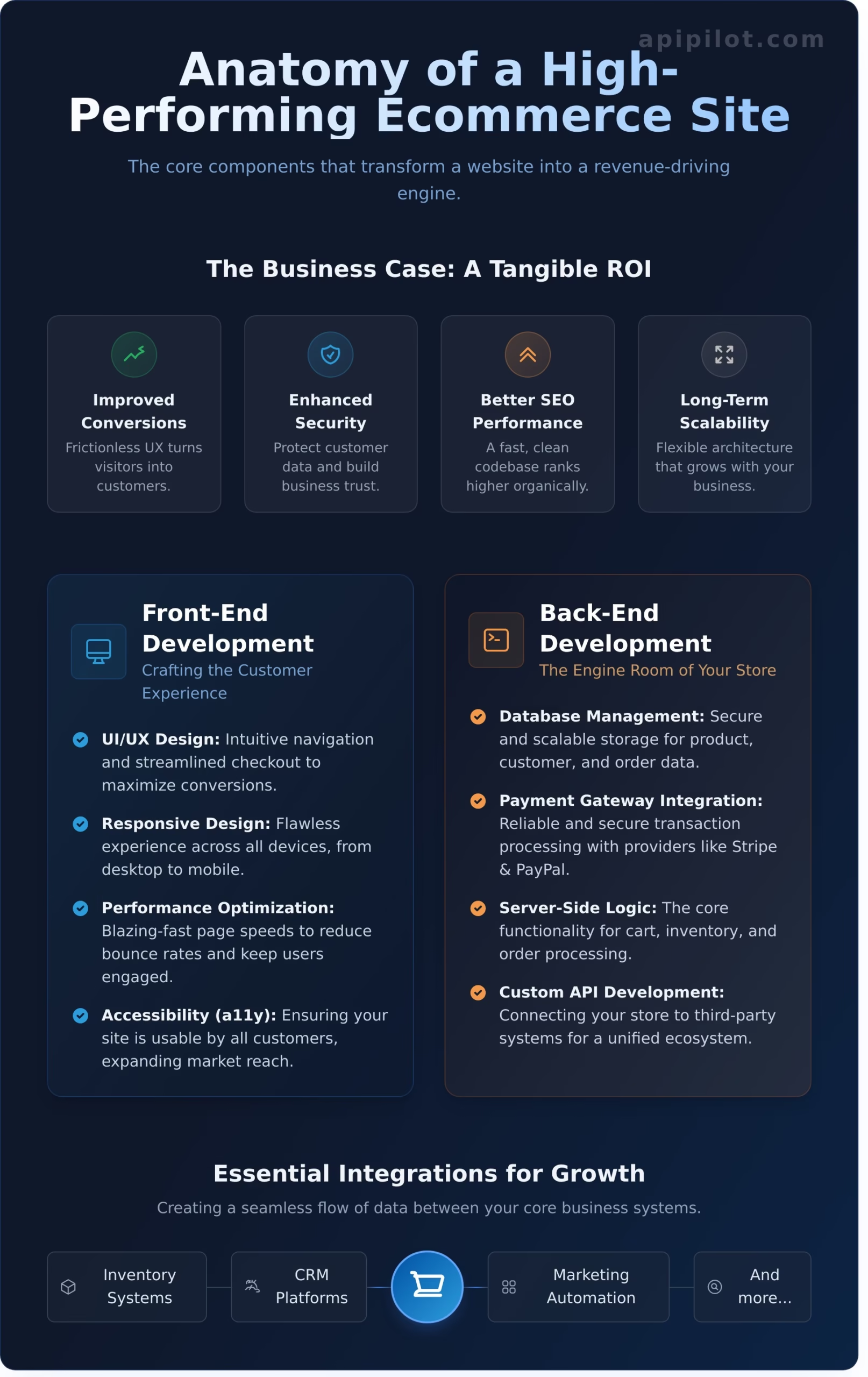
The Business Case: ROI of Investing in Quality Development
Investing in custom development delivers a direct and measurable return by transforming your website from a cost center into a primary revenue driver.
- Improved Conversion Rates: A superior, frictionless user experience directly increases the percentage of visitors who become customers.
- Enhanced Security: Enterprise-grade security protocols protect sensitive customer data, build trust, and safeguard your business reputation—an asset as vital in the digital world as operational safety training from providers like Aspire First Aid Guide Training Corp is in the physical one.
- Better SEO Performance: A clean, fast, and technically sound codebase is rewarded by search engines with higher rankings and more organic traffic.
- Long-Term Scalability: Build on a flexible architecture that grows with your business, avoiding the need for costly and disruptive rebuilds down the line.
Anatomy of a High-Performing Ecommerce Site: Core Development Areas
A successful online store is a powerful sales engine, built from meticulously engineered components that work in harmony. It’s far more than a digital product catalog and a cart; it’s a unified system where the customer-facing front-end and the operational back-end are seamlessly integrated. This technical foundation is a critical part of any effective ecommerce digital strategy, turning a simple product showcase into a scalable revenue platform. Our ecommerce website development services focus on building this rock-solid architecture from the ground up.
Understanding these core areas reveals how a custom-built site delivers superior performance and ROI.
Front-End Development: Crafting the Customer Experience
The front-end is everything your customer sees and interacts with. Its primary goal is to provide a frictionless path from discovery to checkout. We engineer a user experience that is intuitive, fast, and accessible to everyone.
For example, in the luxury goods sector, the front-end must do more than just function—it must convey brand prestige and quality. An online store like KaMila Fine Jewellery relies on a sophisticated and visually compelling user experience to reflect the craftsmanship of its products and build customer trust.
- UI/UX Design: We build clean interfaces, intuitive navigation, and a streamlined checkout process to maximize conversions and reduce cart abandonment.
- Responsive Design: Your store will deliver a flawless, optimized experience across every device, from desktop monitors to mobile phones.
- Performance Optimization: Blazing-fast page load speeds are non-negotiable. We optimize every asset to reduce bounce rates and keep users engaged.
- Accessibility (a11y): We ensure your website is compliant and usable for all customers, including those with disabilities, expanding your market reach.
Back-End Development: The Engine Room of Your Store
The back-end is the robust engine that powers your entire operation. This server-side architecture handles all the complex logic, data management, and security that keeps your business running smoothly and securely.
- Database Management: Secure and efficient storage for all product, customer, and order data, built for scalability and integrity.
- Payment Gateway Integration: Secure, reliable, and seamless integration with providers like Stripe, PayPal, and Authorize.net to process transactions safely.
- Server-Side Logic: The core functionality that powers the shopping cart, inventory management, user accounts, and order processing.
- Custom API Development: We build and integrate APIs to connect your store to any third-party system, creating a unified business ecosystem.
Essential Integrations for Growth and Efficiency
A high-performing ecommerce site doesn’t operate in a silo. Strategic integrations automate processes, provide critical business intelligence, and create a scalable foundation for growth. Our ecommerce website development services ensure these systems communicate flawlessly.
- Inventory Management Systems: Sync online stock levels with physical warehouses or ERPs in real-time to prevent overselling.
- Shipping & Logistics APIs: Automate shipping rate calculations, label printing, and order tracking for operational efficiency.
- Customer Relationship Management (CRM): Centralize customer data to personalize marketing efforts and improve service.
- Analytics and Marketing Tools: Integrate platforms like Google Analytics, email marketing services, and review systems to measure performance and drive sales.
While these technical integrations are crucial for tracking performance, a strategic advertising plan is essential for driving the initial traffic needed to generate that performance data. If you’re exploring options for promoting your new store, you can learn more about 2X Sales.
Choosing Your Foundation: Ecommerce Platforms vs. Custom Builds
Selecting the right technology stack is a critical architectural decision for your online store. This foundation dictates your scalability, feature velocity, and total cost of ownership. The choice between a templated platform and a bespoke solution is central to any discussion about professional ecommerce website development services. Let’s break down the primary paths to help you make an informed, strategic decision.
SaaS Platforms (e.g., Shopify, BigCommerce)
Software-as-a-Service (SaaS) platforms offer a turnkey solution where the provider manages hosting, security, and core updates. This model prioritizes speed-to-market and operational simplicity, allowing you to focus on sales, not servers.
- Pros: Rapid setup, predictable monthly costs, and managed infrastructure that eliminates the need for server maintenance.
- Cons: Limited customization, reliance on third-party apps for extended functionality, and transaction fees that can scale with your success.
Best for: Startups, small businesses, and brands that need to launch quickly with a proven, reliable solution.
Open-Source Platforms (e.g., WooCommerce, Magento)
Open-source platforms provide the core code, giving your development team complete freedom to build upon it. You control the hosting, security, and every line of code, offering unparalleled ownership and flexibility.
- Pros: Total customization control, a vast ecosystem of extensions, and no platform-level transaction fees.
- Cons: Requires significant development resources, and you are fully responsible for hosting, security patches, and performance optimization.
Best for: Established businesses with unique feature requirements or those wanting to avoid vendor lock-in and retain full platform ownership.
When to Consider a Fully Custom Headless Solution
A headless architecture decouples the customer-facing front-end (the “head”) from the back-end commerce engine. This API-first approach allows you to build blazing-fast, custom user experiences for web, mobile, and any other channel, all powered by a single, robust back-end.
- Pros: Unmatched performance and design freedom, seamless omnichannel integrations, and future-proof scalability.
- Cons: The highest initial investment in terms of cost and complexity, requiring a highly skilled development team.
Navigating these options requires a clear understanding of your long-term business goals. The right path depends on your budget, timeline, and technical requirements. Our experts can help you choose the right platform.
The Ecommerce Development Process: From Discovery to Launch
Building a high-performance ecommerce platform requires a disciplined, transparent process. We eliminate uncertainty by mapping every step from initial concept to live deployment. Our structured, four-phase approach ensures alignment, efficiency, and a final product engineered for growth. This collaborative framework is central to our ecommerce website development services, ensuring your vision is executed with precision.
Phase 1: Discovery, Strategy, and Planning
This foundational phase aligns our technical strategy with your business objectives. We collaborate closely to define success metrics (KPIs), technical architecture, and a precise project roadmap. The goal is to establish a rock-solid plan that minimizes risk and maximizes ROI before development begins.
- Key Deliverables: Detailed project scope, technical specifications, feature prioritization, and a clear timeline with budget allocation.
Phase 2: UI/UX Design and Prototyping
Here, we translate strategy into a tangible user experience. Our focus is on creating intuitive, high-conversion user flows and a visually compelling interface. We build interactive prototypes to validate design decisions with real user feedback before a single line of code is written, ensuring the final design is both beautiful and functional.
- Key Deliverables: Site architecture map, wireframes, high-fidelity UI mockups, and a clickable prototype for testing.
Phase 3: Development and Implementation
Our engineers build the robust, scalable backend and pixel-perfect frontend based on the approved designs. We implement core features, integrate essential third-party APIs for payments, shipping, and data enrichment (explore powerful options at apipilot.com), and build a secure, high-performance foundation for your store.
- Key Deliverables: Clean, documented code; a functional front-end and back-end; and seamlessly integrated third-party services.
Phase 4: QA Testing, Launch, and Ongoing Support
Before launch, your platform undergoes rigorous quality assurance testing to ensure it is bug-free, blazing-fast, and fully compatible across all devices and browsers. After a seamless deployment, we transition to a support phase, providing rock-solid maintenance plans to ensure your site operates at peak performance and continues to scale.
- Key Deliverables: Comprehensive QA test reports, a live and fully functional website, and a post-launch support agreement.
How to Choose the Right Ecommerce Development Partner
Selecting a partner is the single most critical decision you will make for your project’s success. The right agency doesn’t just write code; they become a strategic partner invested in your growth. A mismatched team can lead to costly delays, technical debt, and a platform that fails to scale. Use the following criteria to rigorously vet potential providers of ecommerce website development services and ensure you choose a partner equipped to deliver.
Evaluate Their Portfolio and Relevant Experience
Past performance is the best indicator of future results. Don’t just look at screenshots—analyze their live projects. Scrutinize site speed, user experience, and mobile responsiveness. Look for case studies that mirror your industry or address similar complex challenges, such as custom integrations or headless commerce builds. A strong portfolio demonstrates a proven track record of building robust, high-performance online stores. Always ask for client references to get direct, unfiltered feedback.
Assess Their Technical Expertise and Team Structure
Technical competency is non-negotiable. Your potential partner must have deep, specialized expertise in your chosen technology stack, whether it’s Shopify, Magento, or a custom framework. Ask critical questions about their development process and team:
- Do they follow an Agile methodology for iterative progress and feedback?
- What is the seniority mix of their development team (senior vs. junior developers)?
- How do they handle quality assurance, security protocols, and performance testing?
A proficient team will provide clear, confident answers that showcase their structured and disciplined approach to building enterprise-grade ecommerce solutions.
Gauge Communication and Project Management
Seamless execution depends on transparent communication and efficient project management. A lack of clarity here is a major red flag. Define expectations early by asking how they manage workflow and stakeholder communication. Who will be your dedicated point of contact? What tools, like Jira or Asana, do they use to track progress and manage tasks? A professional partner will have a rock-solid process for keeping you informed and the project on track. See how API Pilot manages successful ecommerce projects.
From Blueprint to Launch: Your Next Steps in Ecommerce
Navigating the complexities of online retail requires a robust technical foundation. This guide has established that a high-performance ecommerce site demands a strategic approach, a critical decision between established platforms and custom builds, and a partnership with a team that understands your growth trajectory. Leveraging professional ecommerce website development services is the most direct path to building a secure, scalable, and conversion-optimized digital storefront that stands out in a competitive market.
API Pilot specializes in engineering these powerful sales engines. With a proven track record delivering for a global clientele, we provide full-cycle development from initial concept to rock-solid post-launch support. Our expertise across Shopify, WooCommerce, and bespoke custom solutions ensures your platform is built for performance. Don’t just build a website; build a core asset for your business. Ready to build your high-growth ecommerce platform? Contact API Pilot today.
Frequently Asked Questions
How much does an ecommerce website development service cost?
The cost of our ecommerce website development services is directly tied to your project’s scope and complexity. A basic site with standard features differs significantly from an enterprise-grade platform with custom API integrations, a headless architecture, or advanced functionalities. We provide a detailed, transparent quote after a thorough discovery call to analyze your specific technical requirements, feature set, and business objectives. This ensures you only pay for the robust solution you need to scale effectively.
How long does it take to build a custom ecommerce website?
A typical custom ecommerce project takes between 12 and 24 weeks from kickoff to launch. This timeline is influenced by the complexity of the design, the number of unique features, and the extent of third-party system integrations. Our development process is broken into efficient sprints—including discovery, UI/UX design, development, and QA testing—to ensure a predictable, streamlined delivery. We prioritize building a powerful, scalable platform without compromising on quality or speed.
What is the difference between hiring an agency vs. a freelancer?
An agency provides a holistic, multidisciplinary team—including project managers, developers, designers, and QA specialists—to handle complex, end-to-end projects. This ensures seamless collaboration, robust quality assurance, and long-term scalability. A freelancer is typically a single specialist best suited for smaller, well-defined tasks or augmenting an existing team. For building an enterprise-grade ecommerce platform, an agency’s integrated expertise and structured process deliver a more reliable and comprehensive solution.
Do I need ongoing maintenance and support after my website is launched?
Yes, proactive maintenance is critical for ensuring your ecommerce platform remains secure, fast, and reliable. Our support plans provide essential services like security patching, software updates, performance monitoring, and bug fixes to guarantee rock-solid uptime. This ongoing partnership protects your investment, safeguards customer data, and ensures your store consistently operates at peak efficiency, adapting to new technical challenges and opportunities as your business grows.
Can you integrate the new ecommerce store with my existing business software?
Absolutely. We specialize in creating seamless, automated workflows by integrating your ecommerce platform with essential business systems. Using robust APIs, we connect your store to ERPs, CRMs (like Salesforce), inventory management systems, and marketing automation tools. This ensures real-time data synchronization across your entire tech stack, eliminating manual processes and empowering you with a single, unified source of truth for all business operations.
Which ecommerce platform is best for SEO?
Most modern platforms like Shopify Plus, BigCommerce, and Magento offer strong foundational SEO capabilities. However, the “best” platform is the one that allows for superior technical implementation. Optimal SEO performance depends less on the platform choice and more on a robust site architecture, fast page load speeds, clean code, and correct structured data implementation. Our development process prioritizes building a technically sound foundation engineered for maximum search visibility and organic growth.
What security measures are essential for an online store?
Enterprise-grade security is non-negotiable. Essential measures include implementing an SSL certificate for data encryption, ensuring strict PCI DSS compliance for all payment processing, and deploying a Web Application Firewall (WAF) to block malicious traffic. We also enforce secure coding practices, conduct regular vulnerability scans, and manage timely security patching. These robust layers of protection are critical for safeguarding customer data, preventing breaches, and maintaining brand trust.