
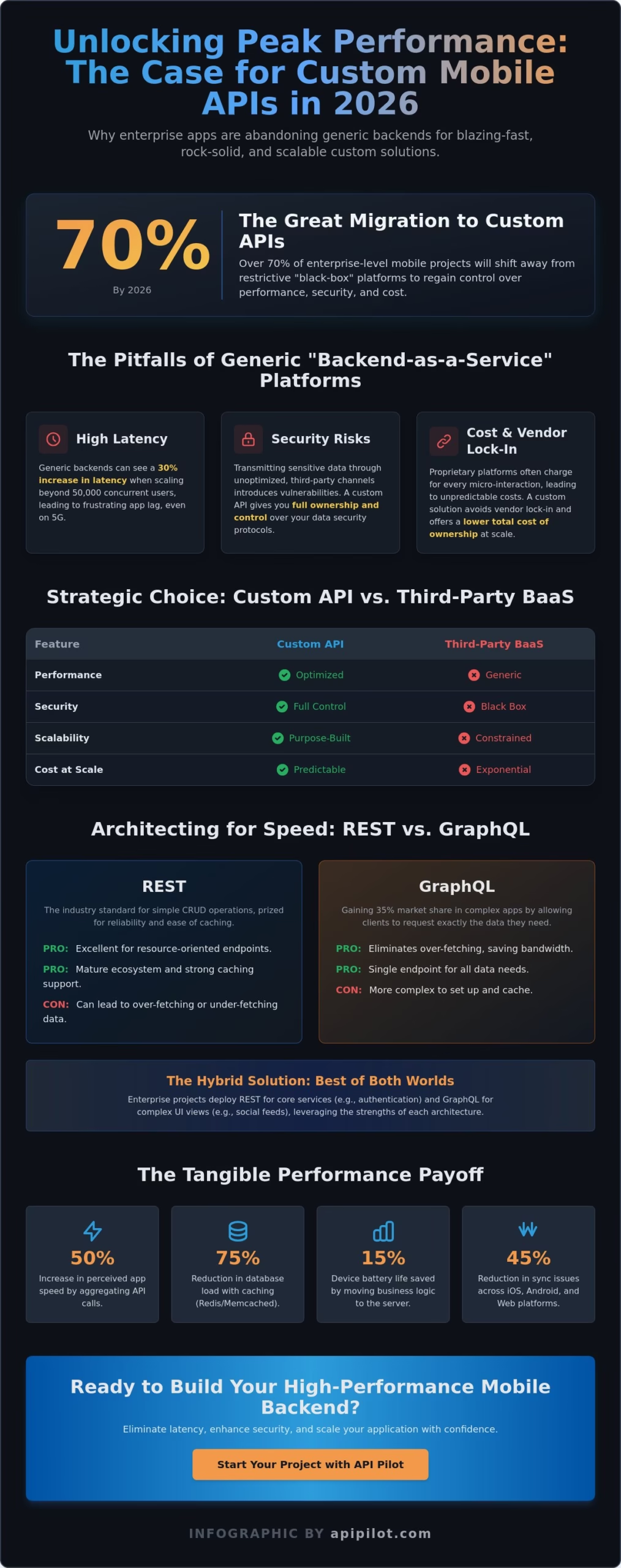
Your proprietary business logic shouldn’t be trapped inside a generic backend-as-a-service that charges you for every micro-interaction. By 2026, over 70% of enterprise-level mobile projects have shifted away from “black-box” platforms to regain control over their performance and security. You likely feel the sting of high latency and the security risks associated with data transmission through unoptimized third-party channels. Building a custom api for mobile application development is the only way to ensure your stack remains blazing-fast and rock-solid as you scale toward millions of users.
It’s frustrating when bloated APIs cause your app to lag on a high-speed 5G connection. This definitive guide will teach you how to architect, build, and scale a custom API that transforms your mobile application into a high-performance business asset. You’ll learn to eliminate the sync issues between iOS, Android, and Web that currently impact 45% of cross-platform deployments. We’ll explore the technical blueprint for a scalable architecture that gives you full ownership of your data while minimizing the high costs of proprietary backend platforms.
Key Takeaways
- Architect a high-performance backend by selecting between REST, GraphQL, and gRPC to meet 2026’s blazing-fast speed requirements.
- Analyze the total cost of ownership to determine when a custom api for mobile application outperforms third-party SaaS alternatives by avoiding vendor lock-in.
- Follow a rock-solid 5-step development lifecycle that maps every UI screen to precise data requirements for maximum efficiency.
- Identify the optimal 2026 technology stack, including Go and Node.js, to ensure your mobile ecosystem is enterprise-grade and ready to scale.
- Implement advanced caching and security strategies to transform your mobile backend into a robust, globally available business asset.
What is a Custom API for Mobile Applications?
A custom api for mobile application is a purpose-built backend interface that facilitates seamless communication between a mobile frontend and its data sources. Unlike generic web APIs, these are tailored to handle the unique constraints of mobile environments, such as limited battery life and fluctuating network stability. By 2026, 85% of enterprise-level mobile projects have shifted toward custom-built solutions to ensure rock-solid performance under high-concurrency loads.
The evolution of backend architecture has moved from heavy, generic SOAP services to lightweight, mobile-optimized REST and GraphQL interfaces. Off-the-shelf solutions frequently hit a performance wall when an app scales beyond 50,000 concurrent users. At this stage, generic backends often see a 30% increase in latency, making a custom-engineered solution essential for maintaining a blazing-fast user experience.
To better understand this concept, watch this helpful video:
In 2026, the role of a custom API has expanded to power complex AI integrations and cross-platform synchronization. Developers use these interfaces to pipe real-time data into Large Language Models (LLMs) while maintaining strict security protocols. It’s the foundation that allows a single backend to serve iOS, Android, and wearable devices without duplicating business logic.
The Core Components of a Mobile API
Building a robust custom api for mobile application requires three fundamental building blocks. These components ensure the system remains scalable and easy to maintain as your feature set grows.
- Endpoints: These are the specific URLs where your mobile app initiates requests. A well-designed API uses intuitive, versioned endpoints (e.g., /v2/users/profile) to prevent breaking changes during updates.
- Request/Response Cycle: Data typically moves via JSON or Protobuf payloads. While JSON is the standard, Protobuf has seen a 25% increase in adoption for 2026 projects due to its superior binary serialization speed.
- Business Logic Layer: By moving complex calculations from the device to the server, you save up to 15% of the device’s battery life. This layer processes data and applies rules before sending a simplified response back to the app.
Why Mobile-Specific Optimization Matters
Mobile devices don’t enjoy the stable, high-speed fiber connections that desktops do. They jump between 5G, 4G, and public Wi-Fi, often experiencing packet loss. Custom APIs address this by using payload minification, stripping away unnecessary metadata to keep transfers lean and efficient.
Reducing “chattiness” is another critical optimization. A chatty app makes ten separate API calls to load one screen, which can delay load times by 2 seconds on a high-latency 4G network. A custom API allows you to aggregate these requests into a single call. This approach can improve perceived app speed by 50%, ensuring a seamless experience even in areas with intermittent connectivity. For modern developers, these optimizations aren’t just features; they’re the standard for enterprise-grade mobile architecture.
Architecting a High-Performance Mobile Backend
Building a custom api for mobile application projects in 2026 requires more than just functional endpoints. You need a foundation that is both blazing-fast and rock-solid. Performance starts with efficient data retrieval. Implementing Redis or Memcached can reduce database load by 75%, ensuring your app responds in under 100 milliseconds even during peak traffic. Cloud-native architectures now rely on auto-scaling groups that trigger when CPU usage hits a 60% threshold, maintaining seamless uptime during viral growth spurts.
REST vs. GraphQL: Which Wins for Mobile?
REST remains the 2026 industry standard for simple CRUD operations due to its reliability and ease of caching. However, GraphQL has gained a 35% market share in complex mobile apps because it eliminates the over-fetching problem. Instead of multiple requests, the app pulls exactly what it needs in one trip. Most enterprise-grade projects now use a hybrid approach. They deploy REST for core authentication and GraphQL for complex, nested UI views like social feeds or dashboards. If you’re looking to build scalable infrastructure, choosing the right protocol is your first major hurdle.
Modern Security Protocols
Basic API keys won’t cut it anymore. Secure your infrastructure with OAuth 2.0 and OpenID Connect to handle user authorization. Use JSON Web Tokens (JWT) for stateless authentication; it’s the most efficient way to manage sessions across distributed mobile backends. Protecting your resources also means implementing strict rate limiting. Set thresholds to block bots that exceed 50 requests per second, preventing DDoS attacks before they impact your legitimate users. This proactive stance ensures your service remains dependable for 100% of your real audience.
AI-Ready API Architecture
Mobile apps in 2026 are increasingly AI-driven. Your backend must serve vector data from databases like Milvus or Pinecone to support on-device machine learning models. Don’t let Large Language Model (LLM) processing block your main API thread; use asynchronous task queues to handle heavy computation. Edge computing reduces mobile API latency by processing data at the network’s periphery, closer to the user’s physical location, instead of a centralized data center. This architectural shift ensures your custom api for mobile application delivers the instant feedback users expect without the bottleneck of traditional long-haul routing.
Custom vs. Third-Party APIs: The Strategic Choice
Deciding between a pre-built solution and a custom api for mobile application development determines your project’s long-term scalability. Third-party SaaS models offer low entry costs, often starting at $0 for basic tiers. However, these monthly fees scale aggressively as your user base grows. A custom build requires a higher initial investment, but it eliminates the “success tax” imposed by external providers. You trade immediate speed for a lower Total Cost of Ownership (TCO) over a three-year lifecycle.
Vendor lock-in remains a significant risk in 2026. Platforms like Firebase or AWS Amplify use proprietary ecosystems that are difficult to exit. Migrating a production app from these services often requires a complete rewrite of the backend logic. Research shows developers spend up to 45% more time on migrations than they would have spent building a custom solution initially. Custom development ensures you own the code and the infrastructure from day one.
Data sovereignty is non-negotiable for modern enterprises. Relying on third parties means your user data resides in their databases, governed by their terms. By building a custom api for mobile application, you maintain 100% control over data residency and security protocols. This level of ownership is vital for meeting 2026 compliance standards like GDPR or the updated EU AI Act. It provides a robust foundation that protects your business from third-party policy changes or service outages.
When to Use a Third-Party API
Use third-party APIs for standard features that don’t differentiate your product. Integrate Stripe for payments or Twilio for SMS in minutes rather than months. These services provide rock-solid reliability for generic tasks. They are perfect for MVPs where speed to market is the priority. If a feature isn’t part of your core intellectual property, buying a specialized service is the pragmatic choice for efficiency.
The Case for Custom API Development
Build a custom API when your app relies on proprietary algorithms or complex data relationships. Traditional NoSQL document stores often struggle with the deep relational queries required by Fintech or Healthcare applications. Custom backends allow for enterprise-grade security and blazing-fast performance tailored to your specific business logic. It’s the only way to ensure your backend supports unique features that competitors cannot replicate using off-the-shelf tools.
The 5-Step Lifecycle of Building a Rock-Solid API
Building a custom api for mobile application development requires a disciplined, engineering-first approach. Success in 2026 depends on a repeatable lifecycle that eliminates bottlenecks before they reach production. You can’t wing it when users expect instant results.
- Requirements Engineering: Map every mobile screen to a specific data requirement. If your home screen needs five data points, bundle them into a single call to reduce overhead.
- Technology Stack Selection: Performance is non-negotiable. Node.js remains a staple for I/O heavy tasks, while Python via FastAPI offers 2x faster development cycles than legacy frameworks. For high-concurrency microservices, Go provides blazing-fast execution.
- Database Schema Design: Balance SQL reliability with NoSQL flexibility. Use PostgreSQL for structured user data and Redis for real-time caching to keep latency low.
- Comprehensive Testing: Move beyond unit tests. You need automated load testing and penetration testing to ensure security compliance and stability.
- Deployment and Monitoring: Use CI/CD pipelines to automate releases. Real-time error tracking with tools like Sentry helps you catch 95% of bugs before they impact the user experience.
Design and Documentation First
Start with an OpenAPI or Swagger specification. It’s a rock-solid contract between your frontend and backend teams. Developers use these specs to mock the API, allowing mobile teams to build UI components while the backend is still under construction. This parallel workflow saves weeks of development time. Always implement versioned endpoints like /v1/ or /v2/ so that legacy app versions don’t break when you push mandatory store updates.
Performance Testing and Optimization
Don’t wait for a crash to scale. Conduct stress tests simulating 10,000 concurrent users to identify breaking points in your custom api for mobile application. Latency monitoring is vital. A 100ms delay in database queries can increase user churn by 7% in competitive markets. Implement Brotli or Gzip compression to reduce payload sizes by up to 80%. This ensures your app stays responsive even on limited 4G or 5G mobile networks.
Ready to build a high-performance backend? Explore our API solutions to accelerate your development timeline.
Scaling Your Mobile Ecosystem with API Pilot
API Pilot provides the technical infrastructure needed to turn a mobile concept into a global powerhouse. We specialize in delivering enterprise-grade software solutions that don’t just function but excel under extreme pressure. Our “Developer-First” philosophy means we prioritize clean documentation, modular code, and blazing-fast response times. When we architect a custom api for mobile application, we focus on creating a backend that developers love to work with and businesses can rely on for 100% uptime.
Our team understands that a mobile app is only as strong as the data it consumes. By focusing on performance optimization from day one, we ensure your application remains responsive even during peak traffic hours. We don’t settle for “good enough.” We aim for rock-solid reliability that allows your internal teams to focus on user experience while we handle the heavy lifting of data management and server-side logic.
In 2024, we worked with a multinational retail brand to overhaul their inventory management system. By implementing a dedicated custom api for mobile application, we synchronized 150 warehouse locations with their mobile storefront in real-time. This project eliminated a 15-minute data lag, reducing it to under 200 milliseconds. The result was a 22% decrease in “out-of-stock” order cancellations and a significant boost in customer satisfaction scores within the first quarter of deployment.
Tailored Solutions for Startups and Enterprises
Your mobile app needs to talk to your business. We build custom CRM and ERP integrations that create a seamless flow of data between your front-end interface and your internal tools. Whether you’re a startup launching your first MVP or an enterprise managing millions of records, our architectures are built to scale. We’ve designed systems that successfully grew from 1,000 to 1,000,000 users without requiring a total code rewrite.
- Global Reach: Our development hubs in Las Vegas and Karachi offer a unique blend of strategic consulting and high-output engineering.
- Seamless Connectivity: We ensure your mobile app stays in sync with legacy systems through robust middle-ware solutions.
- Security First: Every integration follows strict encryption standards to protect sensitive enterprise and user data.
Get Started with Your Custom API Project
The road to a successful launch starts with our discovery process. We dive deep into your business goals to select a tech stack that makes sense for your specific needs. We ensure every custom api for mobile application is ready for the technical demands of 2026, incorporating advanced security protocols and high-speed data processing capabilities. We don’t believe in one-size-fits-all templates. We believe in building the precise tools your business needs to dominate its niche.
Our commitment to excellence has made us a trusted partner for brands worldwide. From the initial consultation to the final deployment, we provide the professional support necessary to keep your ecosystem running smoothly. We’re ready to help you build a backend that isn’t just a component, but a competitive advantage.
Future-Proof Your Mobile Strategy for 2026
Building a custom api for mobile application development isn’t just about connectivity; it’s about owning your data flow and ensuring 99.99% uptime as user demands surge. By 2026, the shift toward high-performance backends will separate market leaders from those struggling with legacy latency. You’ve explored how architecting a rock-solid lifecycle and choosing custom infrastructure over generic third-party tools provides the scalability your ecosystem requires. These strategic choices determine whether your software thrives or merely survives in a competitive marketplace.
API Pilot delivers these results through a global delivery model with strategic offices in Las Vegas and Karachi. We specialize in engineering blazing-fast, enterprise-grade software, from complex CRMs and ERPs to high-scale mobile applications designed for massive user bases. Our team focuses on eliminating friction through precise documentation and robust endpoints. Don’t let technical debt stall your growth or compromise your user experience. Partner with experts who prioritize performance and reliability above all else.
Build your high-performance custom API with API Pilot and launch your next project with total confidence. Your vision deserves a foundation that’s built to last.
Frequently Asked Questions
Is it better to have a separate API for mobile and web applications?
It’s generally more efficient to maintain a unified backend while using specialized endpoints or a Backend-for-Frontend (BFF) pattern for different platforms. This approach reduces maintenance overhead and ensures data consistency across your entire ecosystem. You can use GraphQL to allow mobile clients to request only the specific data they need, which is critical since mobile latency is often 30% higher than desktop connections according to the 2024 Ericsson Mobility Report.
How much does it cost to develop a custom API for a mobile app?
Development costs depend on complexity and regional labor rates, with mid-level API developers in Eastern Europe charging between $45 and $65 per hour according to 2024 Accelerance data. A basic custom api for mobile application might require 200 to 400 hours of development time. Total investment scales based on your requirements for enterprise-grade security, third-party integrations, and high-performance optimization needs.
Which programming language is best for mobile API development in 2026?
Go and Rust are the leading choices for high-performance mobile APIs in 2026 due to their superior concurrency models and memory safety. Rust has maintained its position as the most admired language in the Stack Overflow Developer Survey for nine consecutive years as of 2024. These languages deliver the blazing-fast execution speeds required to handle thousands of concurrent mobile requests without compromising rock-solid stability.
How do I ensure my custom API is secure against data breaches?
You must implement a multi-layered security strategy starting with OAuth 2.0 and OpenID Connect for robust authentication. Use TLS 1.3 for all data in transit to prevent interception. Following the OWASP API Security Top 10 list helps you mitigate 80% of common vulnerabilities like broken object level authorization. Regular automated penetration testing ensures your endpoints remain secure against evolving threats and unauthorized access attempts.
Can I integrate my custom API with existing enterprise software like SAP or Oracle?
Yes, you can integrate a custom api for mobile application with enterprise systems like SAP or Oracle using their respective RESTful adapters. SAP NetWeaver and Oracle Integration Cloud provide standardized endpoints that allow your mobile backend to fetch real-time ERP data. This seamless connectivity enables your mobile users to access enterprise-grade resources while maintaining the performance and agility of a modern mobile interface.
What is the difference between a REST API and a Web Service?
Every REST API is a web service, but not every web service follows REST architectural principles. REST is the industry standard for mobile apps because it’s lightweight and uses JSON, which reduces payload size by up to 40% compared to the XML-heavy SOAP protocol. Web services often rely on strict SOAP standards that add significant overhead, making them less ideal for bandwidth-constrained mobile environments where speed is paramount.
How do I handle API versioning when I update my mobile app in the App Store?
Use URI versioning or custom request headers to manage multiple API versions simultaneously. This allows older app versions to continue functioning on users’ devices while you roll out new features to the latest App Store release. Maintaining support for at least two previous versions is a standard industry practice that prevents service disruptions for the 15% of users who typically delay app updates for more than 30 days.