In a competitive digital landscape, the software you use is more than just a tool—it’s the engine that drives your operations. While off-the-shelf solutions offer a quick start, they often force you to adapt your processes to their limitations. True efficiency and a powerful competitive edge come from technology that is built specifically for you. This guide explores why a tailored software solution is a strategic investment that delivers unmatched efficiency, scalability, and long-term value.
Custom-Built vs. Off-the-Shelf Software: The Core Difference
Understanding the fundamental distinction between custom and off-the-shelf software is the first step in making an informed decision. Custom software is an application designed, developed, and deployed to meet the unique requirements of a specific business. Think of it as a tailored suit, crafted to fit your exact measurements and operational style.
In contrast, off-the-shelf software is a mass-produced product designed to serve a broad market with a standardized set of features. While functional, it’s a one-size-fits-all approach that rarely aligns perfectly with any single organization’s unique workflows or strategic goals.
Key Takeaways: Why Choose Custom Software?
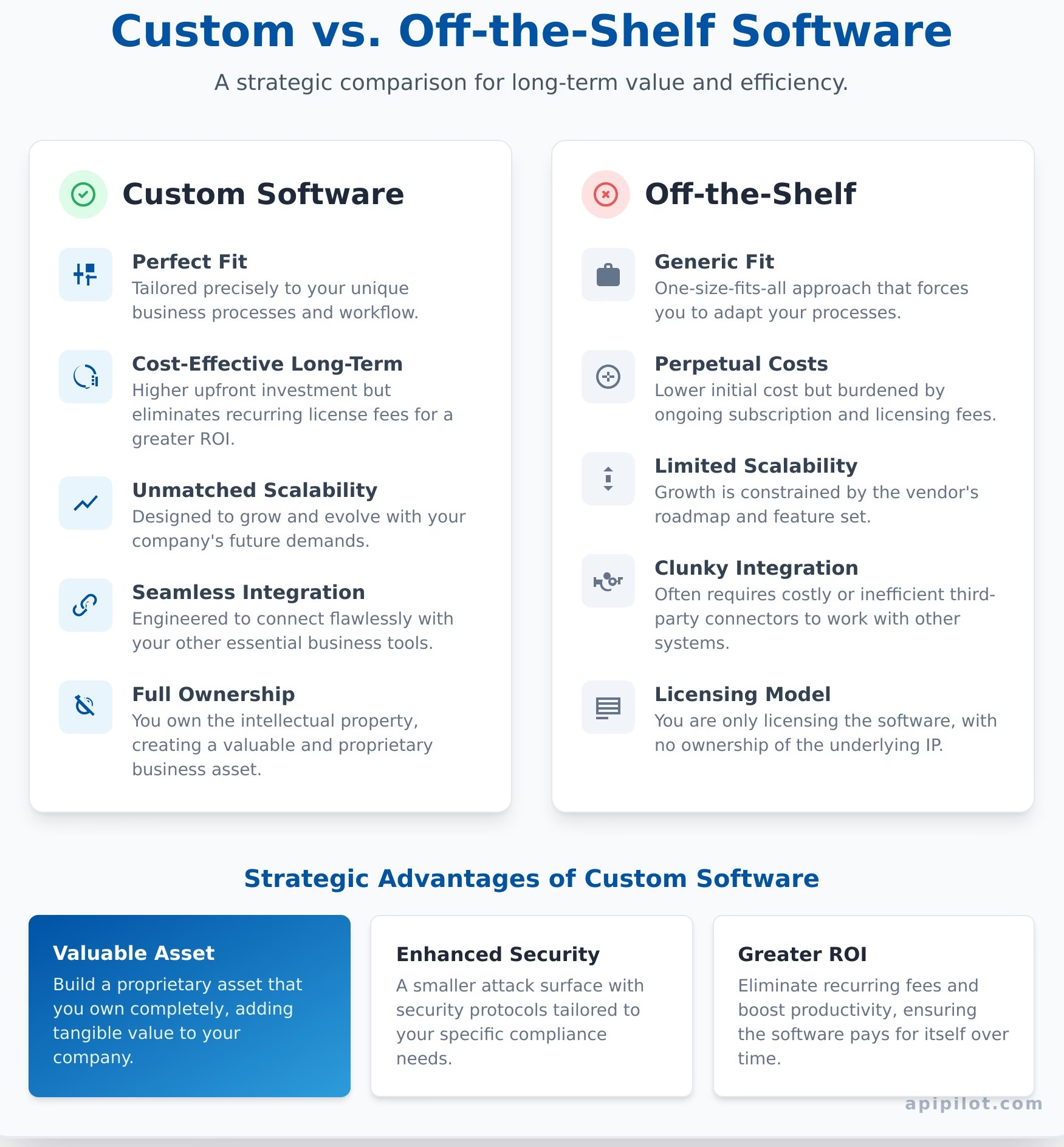
- Perfect Fit: Get a solution that perfectly matches your unique business processes, rather than changing your processes to fit the software.
- Greater ROI: Achieve a better long-term return on investment by eliminating recurring license fees and paying only for the features you actually need.
- Valuable Asset: Build a scalable, secure, and proprietary asset that you own completely, adding tangible value to your company.
Here is a direct comparison to help clarify the choice:
| Feature | Custom Software | Off-the-Shelf Software |
|---|---|---|
| Fit | Tailored precisely to your business needs. | Generic features for a broad audience. |
| Cost Structure | Higher upfront investment, lower long-term cost. | Lower initial cost, ongoing subscription fees. |
| Scalability | Built to grow and evolve with your company. | Limited by the vendor’s roadmap and feature set. |
| Integration | Seamlessly integrates with your existing systems. | May require costly or clunky third-party connectors. |
| Ownership | You own the intellectual property. | You are licensing the software from a vendor. |
The Strategic Advantages of Custom Software Development
Choosing custom software is a strategic decision that moves beyond simple features to deliver a significant business impact. These advantages empower your organization to operate more efficiently, securely, and with greater agility in the marketplace.
1. Tailored Solution for Your Exact Needs
The most significant advantage of custom software is that it’s built around your specific workflow, not the other way around. You are no longer forced to use cumbersome workarounds or pay for a suite of bloated features you will never use. This tailored approach allows you to solve unique business problems that generic software simply cannot address, giving you a distinct operational advantage.
For example, a generic logistics package would be insufficient for the unique operational demands of a global chokepoint, which requires highly specialized solutions like ship repair services Panama Canal. In the same way, your unique business challenges demand a tailored software solution, not a generic one.
2. Unmatched Scalability and Flexibility
Your business is not static, and your software shouldn’t be either. Custom solutions are designed to grow and adapt alongside your company. Whether you need to handle more users, process larger volumes of data, or integrate new technologies, your software can evolve to meet future demands. This avoids the massive cost and disruption of migrating to a new system when you outgrow an off-the-shelf product.
3. Enhanced Security and Data Protection
Off-the-shelf software is a common target for hackers due to its widespread use and known vulnerabilities. Custom-built solutions present a much smaller attack surface. You have complete control over the security protocols, allowing you to implement measures specific to your industry, data sensitivity, and compliance requirements like GDPR or HIPAA, ensuring your critical business data remains protected.
4. Seamless Integration with Existing Systems
Businesses rarely operate on a single platform. Custom software can be engineered to connect flawlessly with your other essential tools, from CRMs and ERPs to proprietary databases. This seamless integration automates workflows, eliminates error-prone manual data entry, and creates a single source of truth for your business data, leading to better decision-making and increased productivity.
5. Greater Long-Term ROI and Cost-Effectiveness
While the initial development cost is higher, custom software delivers a superior long-term return on investment. You avoid the perpetual cycle of recurring licensing fees that define the off-the-shelf model. By increasing team productivity and reducing operational friction, the software pays for itself over time. Most importantly, you own a valuable business asset that adds to your company’s valuation. Unsure about the numbers? Calculate the potential ROI for your project with our experts.
Making the Right Decision: Is Custom Software for You?
Opting for custom software is a significant strategic decision that requires careful consideration of the investment in both time and resources. It’s not just a purchase; it’s a development project that shapes the future of your operations.
Addressing the Higher Upfront Investment
It’s important to acknowledge that the initial cost for custom software development is higher than buying a pre-made solution. However, this should be viewed as a capital investment in a core business asset, much like purchasing property or essential equipment. When you compare this one-time investment to the endless cycle of subscription fees, costly customizations, and per-user charges of off-the-shelf software, the long-term financial benefits of ownership become clear.
Checklist: When to Choose Custom Software
Consider going custom if you answer “yes” to several of the following points:
- You have a unique business process that provides a key competitive advantage.
- No off-the-shelf product on the market meets more than 70% of your critical needs.
- You need to integrate with multiple complex or legacy systems.
- Data security, privacy, and regulatory compliance are top priorities for your operations.
- You are planning for significant business growth and require a highly scalable solution.
For some organizations, especially in sensitive sectors, these priorities extend beyond software to include rigorous personnel vetting. For example, certain roles might require a specialized background check, such as a polygraph test Boise Idaho, to ensure the highest level of trust and security.
Partnering for Success: Why Your Developer Choice Matters
The single biggest risk in custom software development is choosing the wrong development partner. The success of your project depends on a team with proven technical expertise, a transparent process, and a deep understanding of your business goals. A great partner acts as a strategic advisor, guiding you through the process, rather than simply writing code.
At API Pilot, we specialize in building robust, scalable, and secure enterprise-grade applications designed to fuel your growth. We partner with you to transform your vision into a powerful digital asset that delivers measurable results. See how we build powerful custom software solutions.
Frequently Asked Questions
What are the main disadvantages of custom software?
The primary disadvantages are the higher initial upfront cost and the longer time-to-market compared to purchasing a ready-made solution. Choosing the right development partner is also critical to mitigate the risk of a poorly executed project.
How is custom software different from bespoke software?
The terms “custom software” and “bespoke software” are often used interchangeably. Both refer to software developed specifically for a particular organization or user, as opposed to off-the-shelf software for the mass market.
How long does it take to develop custom software?
The timeline varies significantly based on the project’s complexity, the number of features, and the integration requirements. A simple application might take a few months, while a complex enterprise system could take a year or more.
Will I own the source code of my custom software?
Yes. With a reputable development partner like API Pilot, you will have full ownership of the intellectual property and the source code for the software built for you.
Is custom software more secure than off-the-shelf software?
Generally, yes. Because it’s not widely used, it’s a less attractive target for malicious attacks. Furthermore, you can build specific, high-level security features tailored to your unique risks and compliance needs.
How much does custom software development cost?
The cost depends entirely on the scope and complexity of the project. It’s determined by factors like the number of features, the technologies used, and the hours required for development, design, and testing. A detailed consultation is needed to provide an accurate estimate.
Investing in custom software is an investment in your company’s future. It’s about creating a tool that empowers your team, streamlines your operations, and provides a platform for sustainable growth. By moving beyond the limitations of generic solutions, you can build a true competitive advantage. Ready to build a powerful solution? Contact API Pilot today.